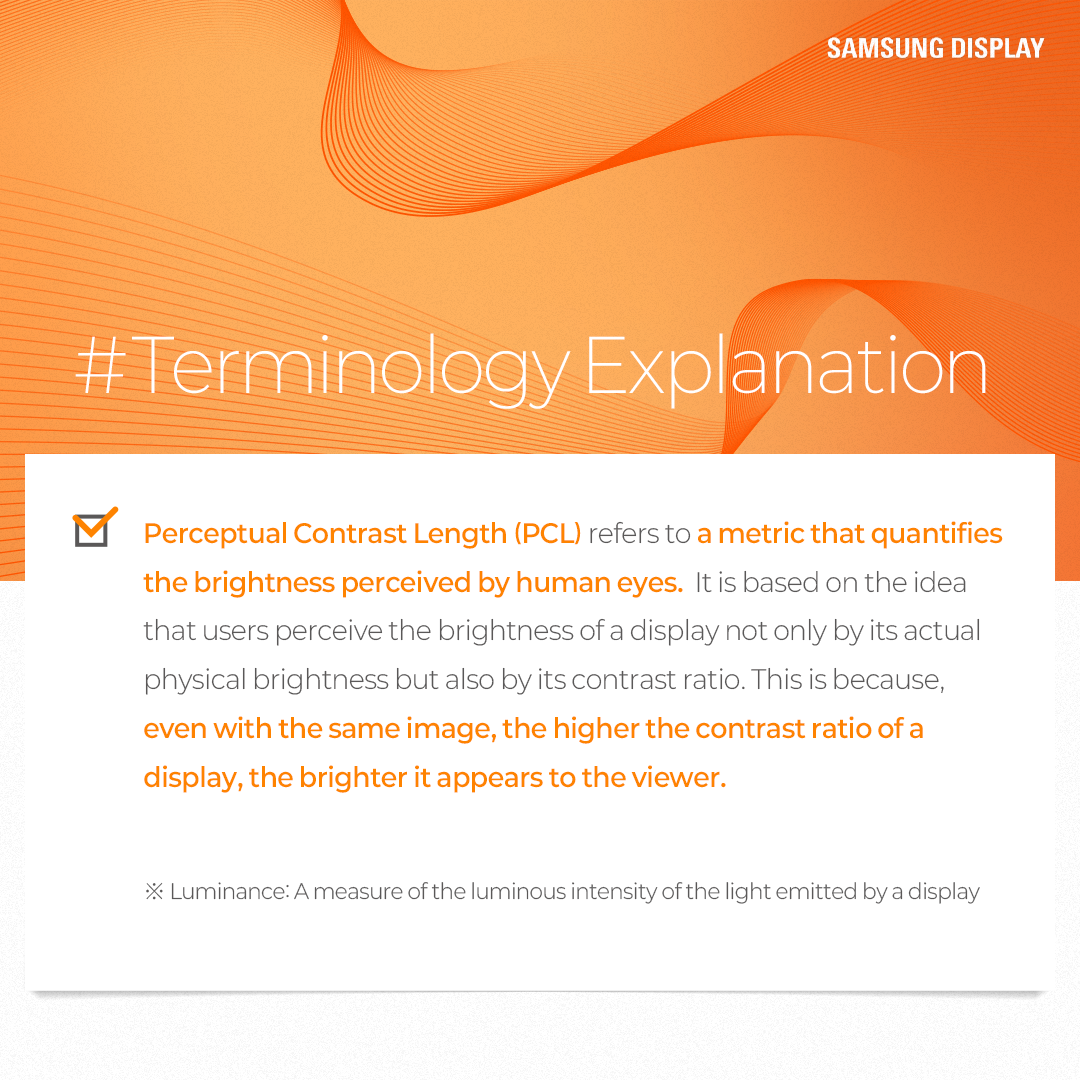
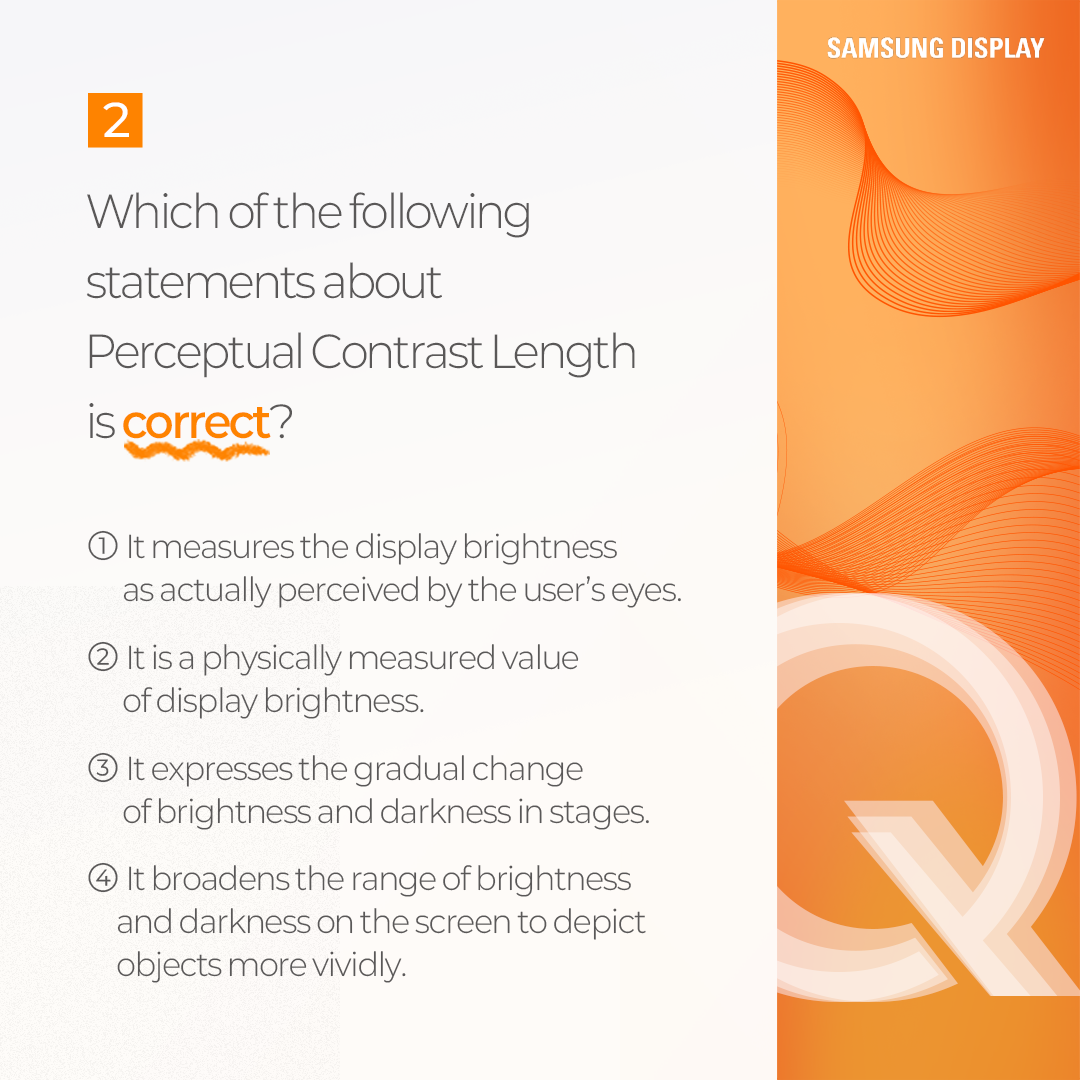
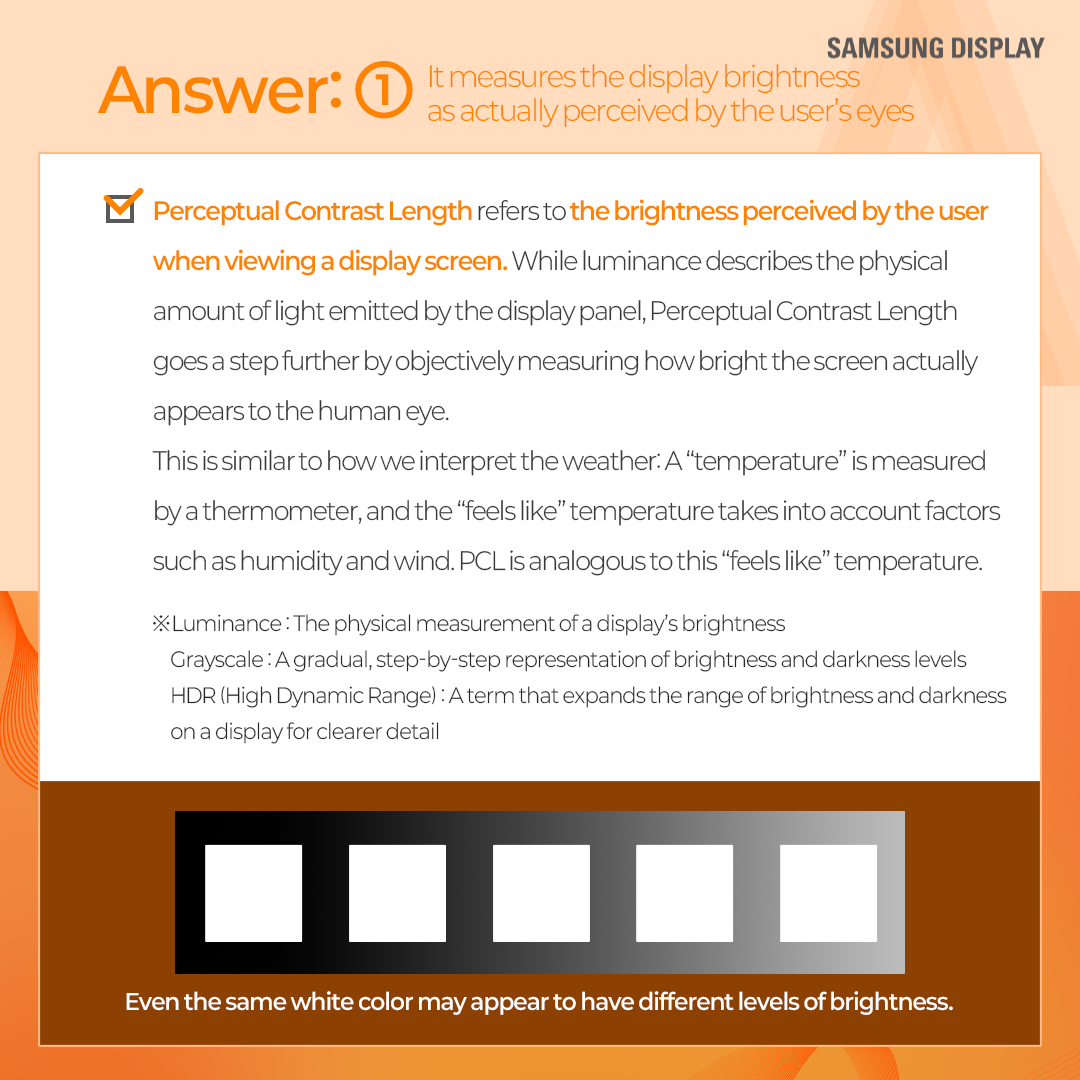
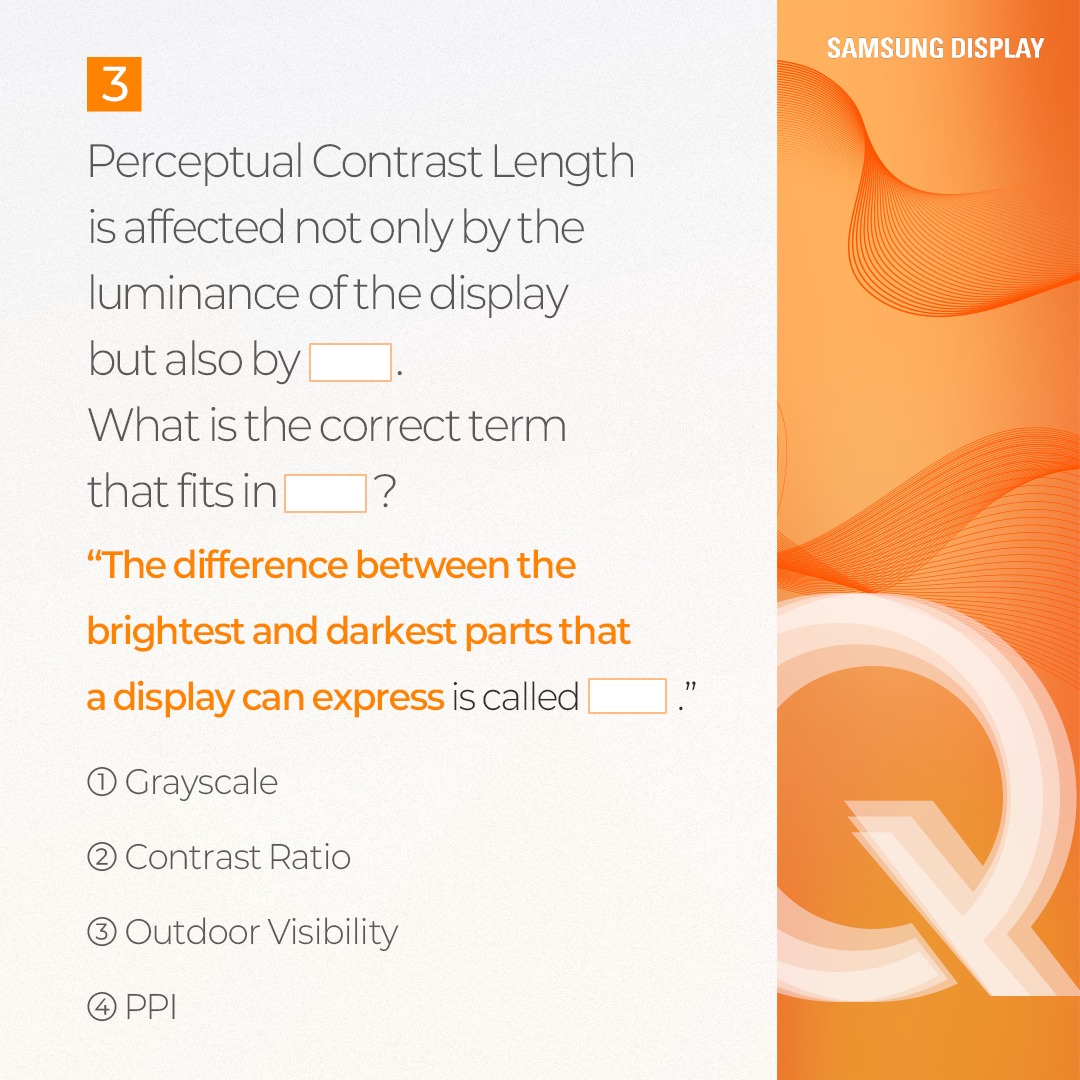
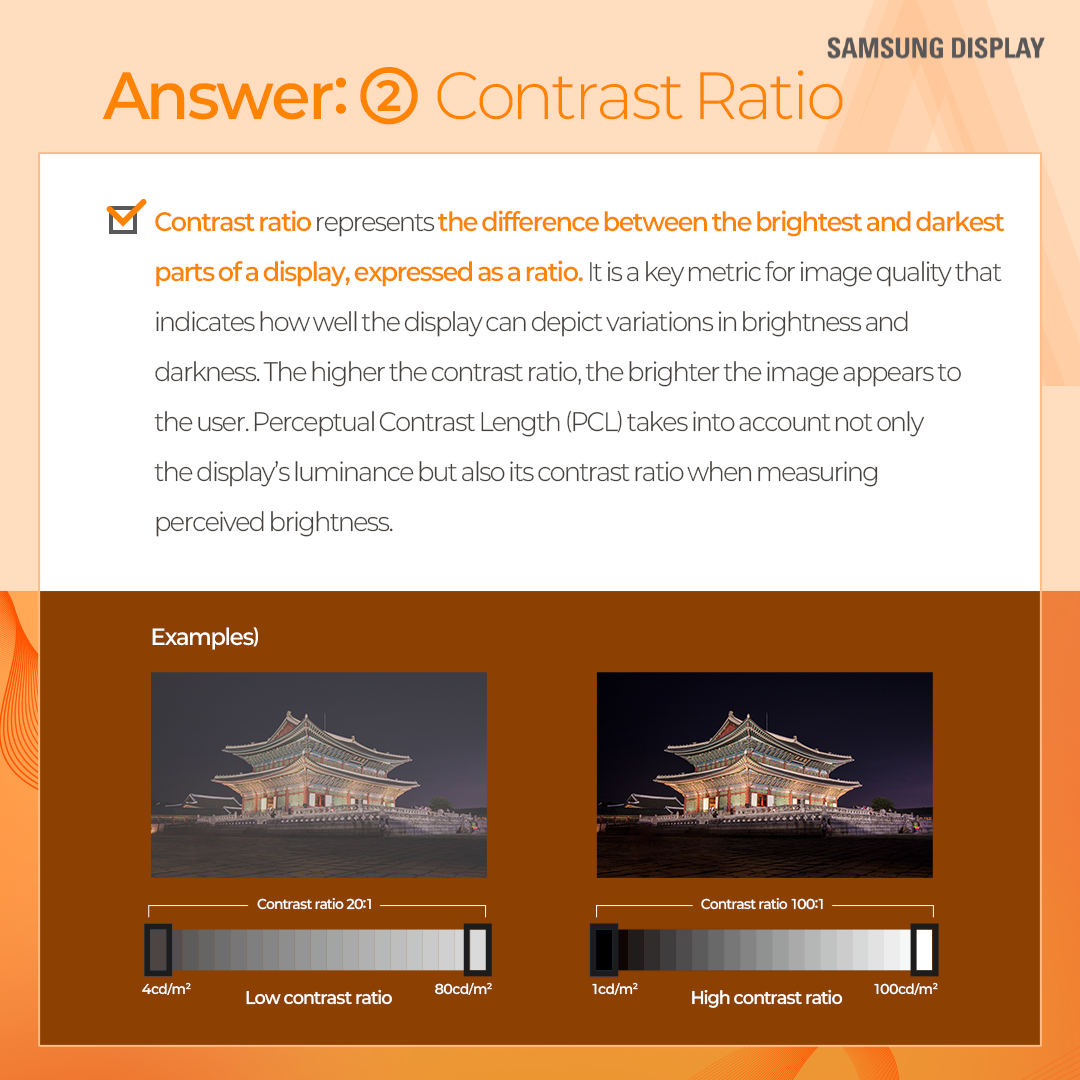
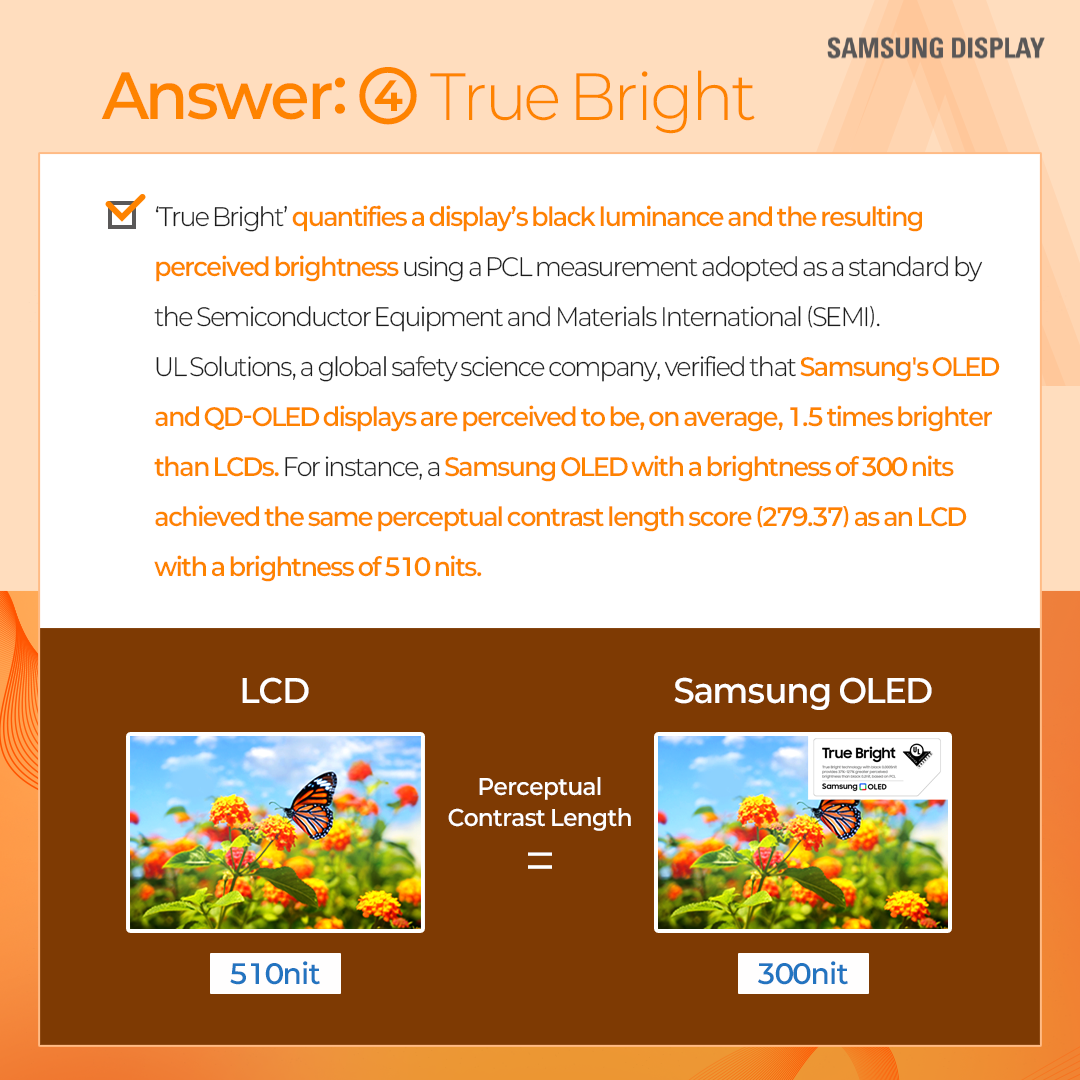
Perceptual Contrast Length (PCL) refers to a metric that quantifies the brightness perceived by human eyes. It is based on the idea that users perceive the brightness of a display not only by its actual physical brightness but also by its contrast ratio. This is because, even with the same image, the higher the contrast ratio of a display, the brighter it appears to the viewer.