• An AI–display convergence lifestyle proposed through future-focused devices including the “AI OLED Bot”
• High-quality IT OLED expanding rapidly for the AI era, from offices to homes
• Dashboard-like display in future car interior, realized with Samsung OLED
• OLED durability demonstrated through basketball impact tests on foldable panels and displays inside a refrigerator
• An up-close experience of RGB OLEDoS image quality, a watch-sized display with three times the pixels of a 4K TV
SEOUL, January 4, 2026 - Samsung Display will showcase a comprehensive lineup of next-generation OLED products at CES 2026, illustrating how OLED can enrich AI-driven lifestyles across both futuristic and everyday applications. Through a lifestyle-focused exhibition that features both familiar electronic devices and new product concepts, visitors will be invited to imagine a richer AI experience made possible by OLED technology.
Under the theme “A New Era of Experience, Powered by AI & Display,” Samsung Display will host a private exhibition for global customers during CES 2026, held from January 6 to 9 (local time) in Las Vegas.
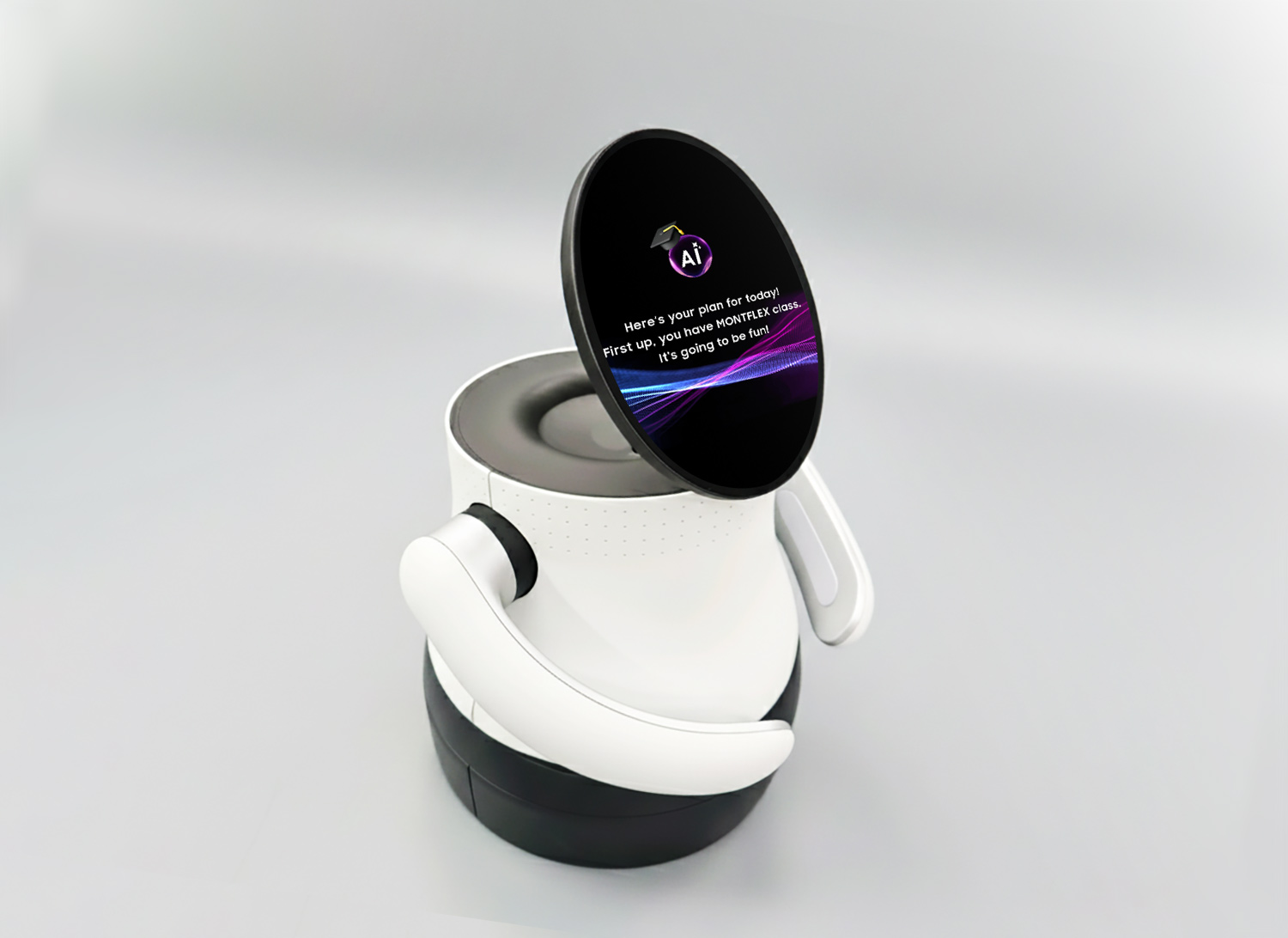
At the exhibition, Samsung Display will present a variety of OLED concept products, including the “AI OLED Bot,” envisioned as a communication platform between humans and AI, and outline how its OLED technologies for tablets, laptops, and monitors can create new synergies with AI in everyday life.
The company will also introduce new automotive solutions that enhance interior luxury, leveraging OLED’s free-form design flexibility. Visitors can also experience hands-on demonstrations highlighting Samsung OLED durability, including a robot shooting basketballs at 18 foldable panels and a full display operating inside a refrigerator.
OLED-faced robot in the classroom: OLED enhances future AI assistant experiences
At the AI Edge Vision Station, Samsung Display introduces a range of never-before-seen “Edge Device” concept models that illustrate how OLED could elevate AI-driven lifestyles when applied to AI-enabled form factors.
The “AI OLED Bot,” equipped with a 13.4-inch OLED as its face, is a small robot concept designed to move freely within designated spaces and communicate with users through AI. At CES 2026, it will be introduced as a teaching assistant robot in a university setting, guiding students to classrooms and providing information such as professor profiles. With the robot’s display, students can easily check assignments or class cancellations even in environments where voice commands or speakers are difficult to use. Unlike LCD, OLED can be designed in curved, spherical, or circular forms, allowing greater freedom to reflect a manufacturer’s design intent or individual preferences.
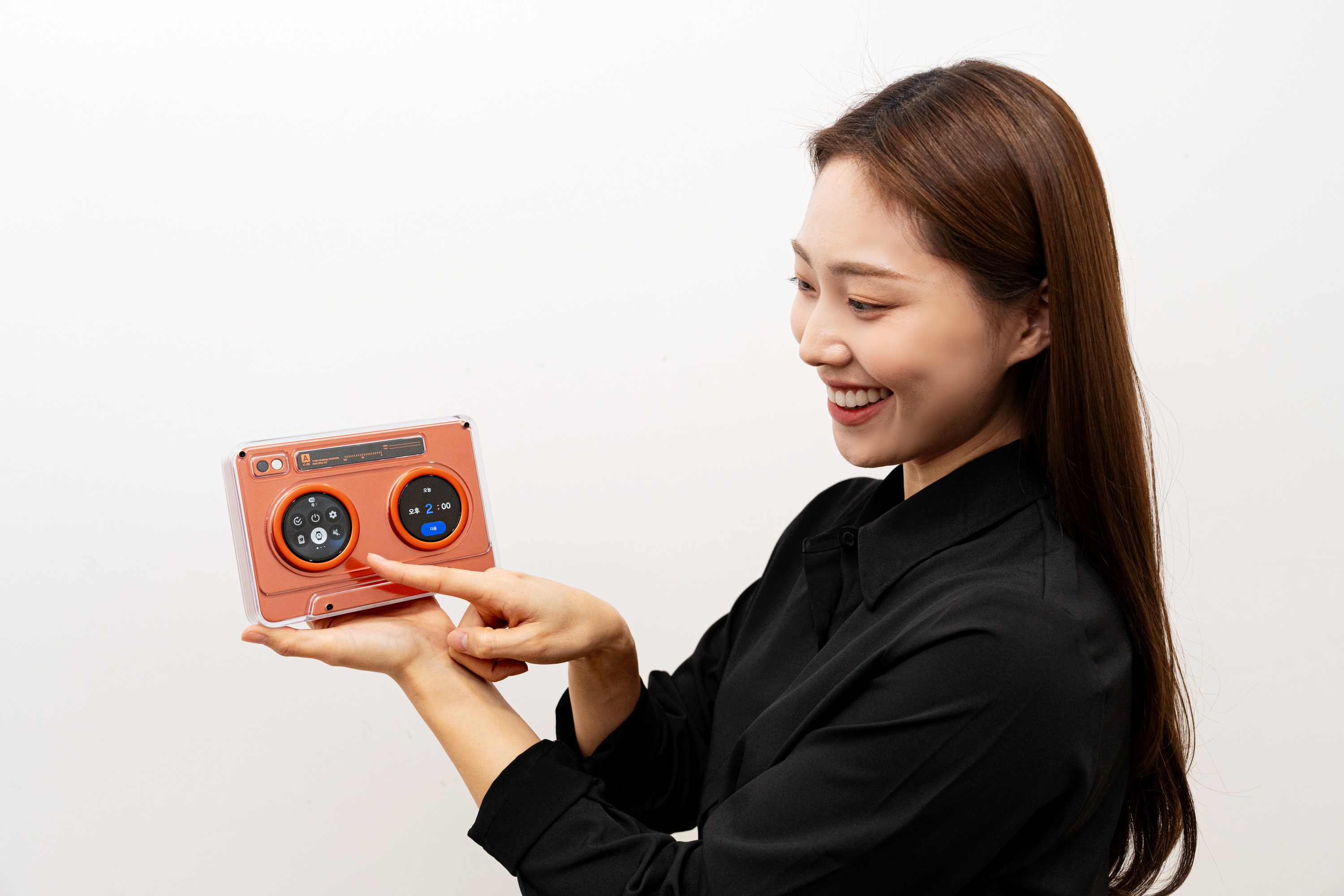
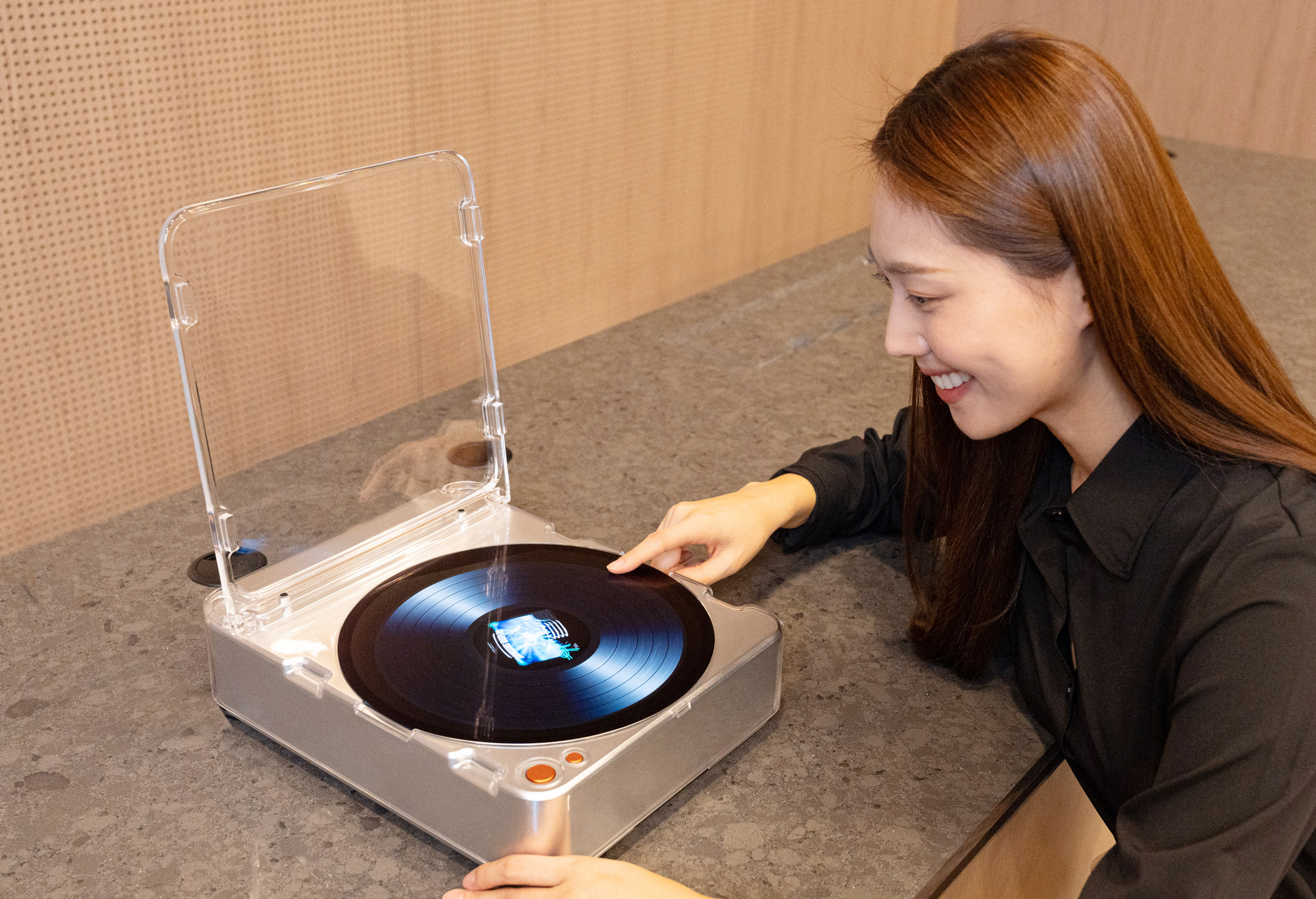
Samsung Display will also showcase several speaker-type AI assistant concepts that offer AI-based music recommendations. While conventional Bluetooth speakers rely on external smart devices, these display-equipped speaker concepts allow users to receive music recommendations, select content directly on the device, and even create interior moods using images and videos. Among the concepts, the “AI OLED Mood Lamp” with a 13.4-inch round OLED adjusts the lighting atmosphere based on the music being played. The “AI OLED Cassette” (1.5-inch round OLED) and “AI OLED Turntable” (13.4-inch round OLED) combine display technology with retro, analog designs.
OLED for Office, Business, Travel and Home: Over 300 IT Products with Samsung OLED and QD-OLED, Used Everywhere
Samsung Display offers scenario-based experiences that show how OLED enhances AI effectiveness across different environments, including offices, business trips, and homes, reflecting the growing adoption of OLED across a wide range of consumer segments and device categories.
In a space modeled after an architectural design office, attendees can experience OLED’s color accuracy, deep blacks, high brightness, and wide viewing angles. OLED displays allow designers to review blueprints, materials, and colors with precise detail, ensuring visual fidelity in AI-assisted digital workflows.
For business travelers, Samsung Display presents OLED solutions optimized for lightweight and slim AI-enabled laptops, led by its “UT (Ultra Thin) One” technology. Unlike conventional dual-glass OLED panels, UT One applies a glass substrate on the bottom and hybrid organic and inorganic thin films on top, making the panel 30% thinner and 30% lighter. Combined with Oxide TFT technology for a variable refresh rate from 1Hz to 120Hz, UT One reduces power consumption and preserves more power for AI-related processing. The technology also delivers deeper blacks by eliminating the air gap between glass substrates; it covers 100% of both the DCI-P3 color gamut, widely used in film and gaming, and Adobe RGB, the standard for printing and professional imaging.
For home use, Samsung Display proposes scenarios where monitors and TVs serve as high-fidelity visual interfaces to AI-enabled systems. QD-OLED monitors with low-power Always-On-Display (AoD) technology can function as wall clocks or digital art frames, and switch to AI-powered displays with health data or daily schedules. With its wide color gamut and broad viewing angles, QD-OLED offers consistent image quality regardless of viewing position.
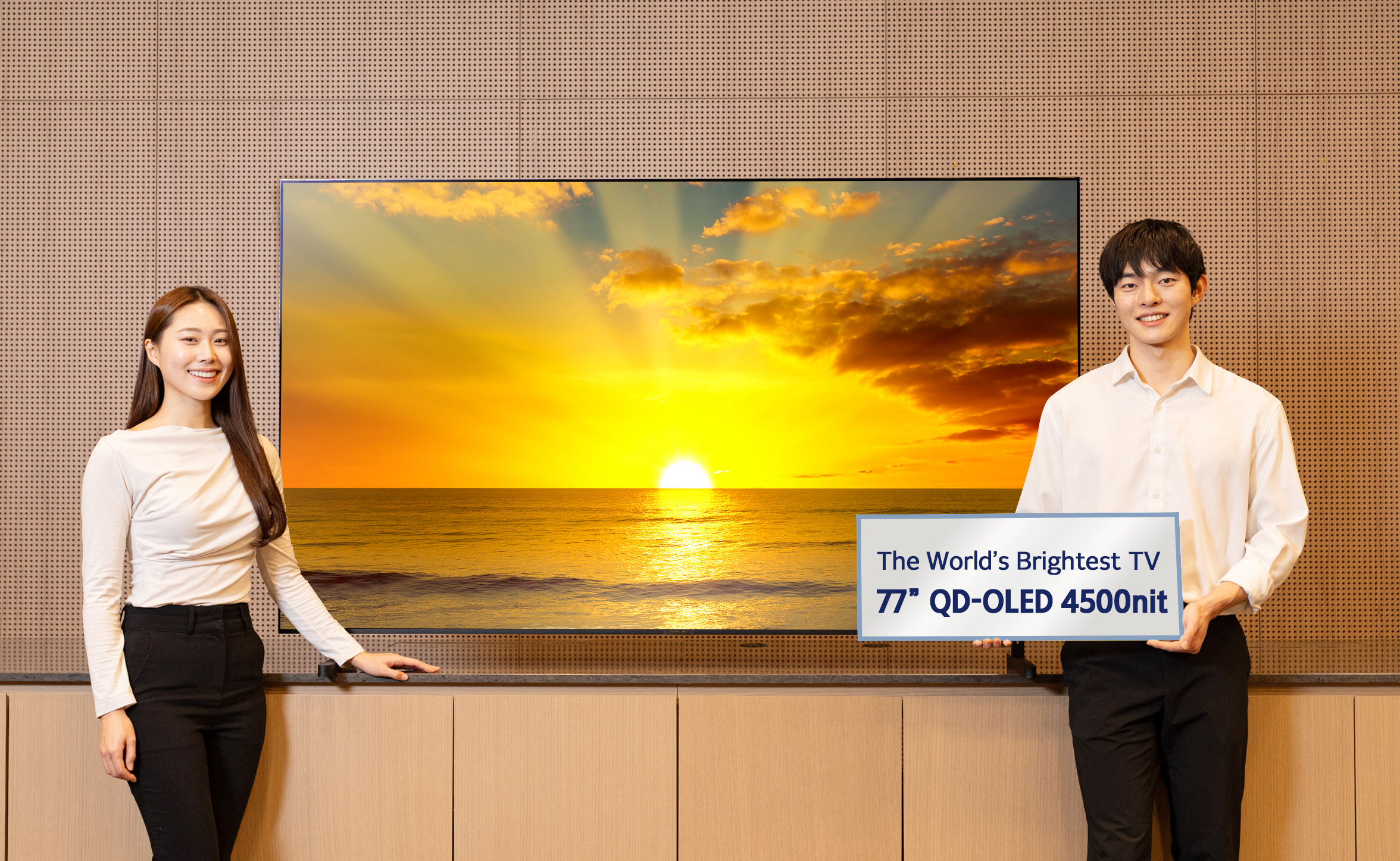
Also, on display for the first time is the 2026 QD-OLED TV model, featuring newly optimized organic materials and supporting a peak brightness of 4,500 nits, among the highest brightness levels achieved for a self-emissive display. QD-OLED achieves its peak luminance by combining the maximum brightness of each RGB component. Compared to competing products with similar peak brightness, QD-OLED demonstrates the potential for more vivid color reproduction and higher perceptual brightness, further enhancing compatibility with AI-based picture quality optimization technologies
“Samsung OLED and QD-OLED are no longer just for gamers or professionals. They are now the ideal solutions for both office and home users in the AI era,” said a Samsung Display spokesperson. “More than 300 tablet, laptop, and monitor models launched last year adopted Samsung Display panels – more than triple the number from three years ago.”
Dashboard-like Displays: Future Car Interiors Realized with Samsung OLED
A newly designed Digital Cockpit demo invites visitors to imagine autonomous vehicles equipped with advanced displays in various shapes and form factors.
At the center fascia between the driver and passenger seats, the 18.1-inch “Flexible L” Center Information Display (CID) connects seamlessly with the dashboard. Upgraded from the previous 14.4-inch version, the L-shaped flexible display enhances both aesthetics and usability, enabling intuitive control of climate and frequently used functions.
The 13.8-inch Passenger Information Display (PID) allows front-seat passengers to enjoy content and can be hidden beneath the dashboard when the driver is alone, improving interior space and design. Other highlights include a curved cluster with a 500R curvature despite using rigid OLED glass, and a 30-inch Rear Seat Entertainment (RSE) display with a 32:9 aspect ratio mounted on the ceiling.
The OLED tail lamp, combining a 34-inch-wide display with an 8-inch display, is a highlight of the new digital cockpit design. In addition to its standard turn-signal function, the OLED offers high visibility even in direct sunlight and can display driving-related information—such as traffic conditions and vehicle status—to following vehicles. For example, it can display an “Accident Ahead” warning when a hazard is detected in front.
Visitors inspired by Samsung Display’s diverse form factors can also design their own vehicle interiors using generative AI. Using tablets at the booth, they can sketch display layouts and select colors and themes, generating personalized interior concepts featuring Samsung OLED.
Basketballs, Steel Balls, and Displays in a Refrigerator: Proving OLED Durability
Samsung Display has prepared multiple demonstrations that allow visitors to experience OLED durability firsthand.
In the “Robot Basketball” zone, 18 foldable OLED panels are mounted on a basketball backboard displaying targets, while a robotic arm repeatedly throws basketballs to test impact resistance. Another test drops steel balls from a height of approximately 30 centimeters onto foldable panels to compare durability against competing products. Samsung Display’s foldable OLED panels continue to operate normally without image distortion or structural damage.
Automotive OLED displays are also showcased inside a refrigerator to prove performance under extreme cold. OLED responds instantly to electrical signals, maintaining a response time of 0.2 milliseconds even at -20°C, similar to room-temperature performance. In contrast, LCD response times can slow to 200 milliseconds under the same conditions. This time lag is equivalent to traveling about 2.8 meters while driving at 100 km/h, meaning OLED can better support safer driving.
Samsung Display will also showcase a range of ultra-high-resolution micro displays for XR devices.
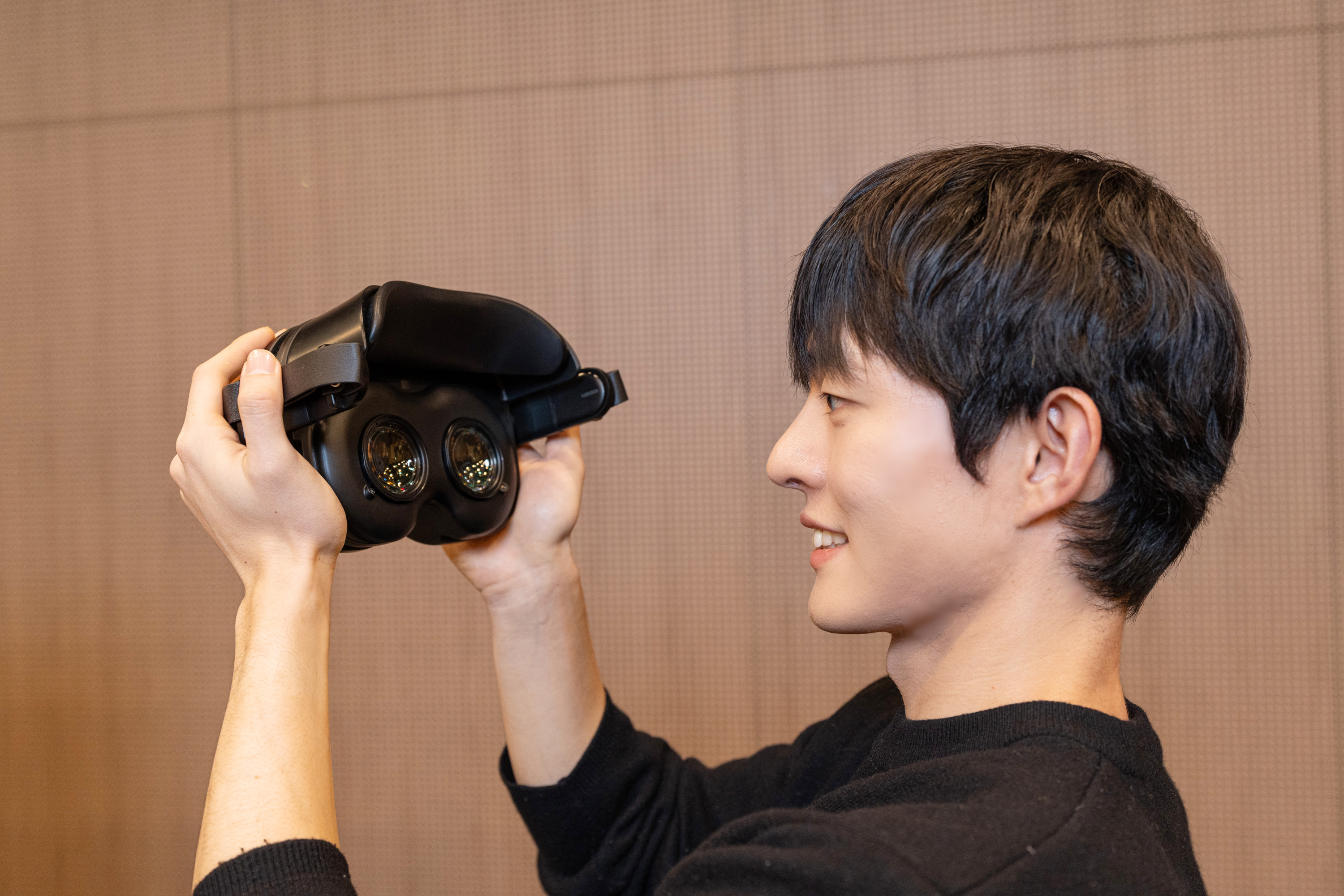
For the first time, the company will exhibit a headset demo equipped with RGB OLEDoS. Measuring just 1.4 inches – similar in size to a watch face – the display boasts a pixel density of 5,000 PPI (Pixel Per Inch), with a pixel count nearly three times that of a 4K TV. In contrast to previous years, when panels were embedded in static displays, this year’s immersive headset demo allows attendees to fully experience RGB OLEDoS image quality in action.
OLEDoS (OLED on Silicon) is a micro display technology that deposits OLED materials on a silicon wafer, enabling pixel sizes in the tens of micrometers. RGB OLEDoS deposits red, green, and blue OLEDs individually without the need for color filters, delivering consistent image quality across wide viewing angles.