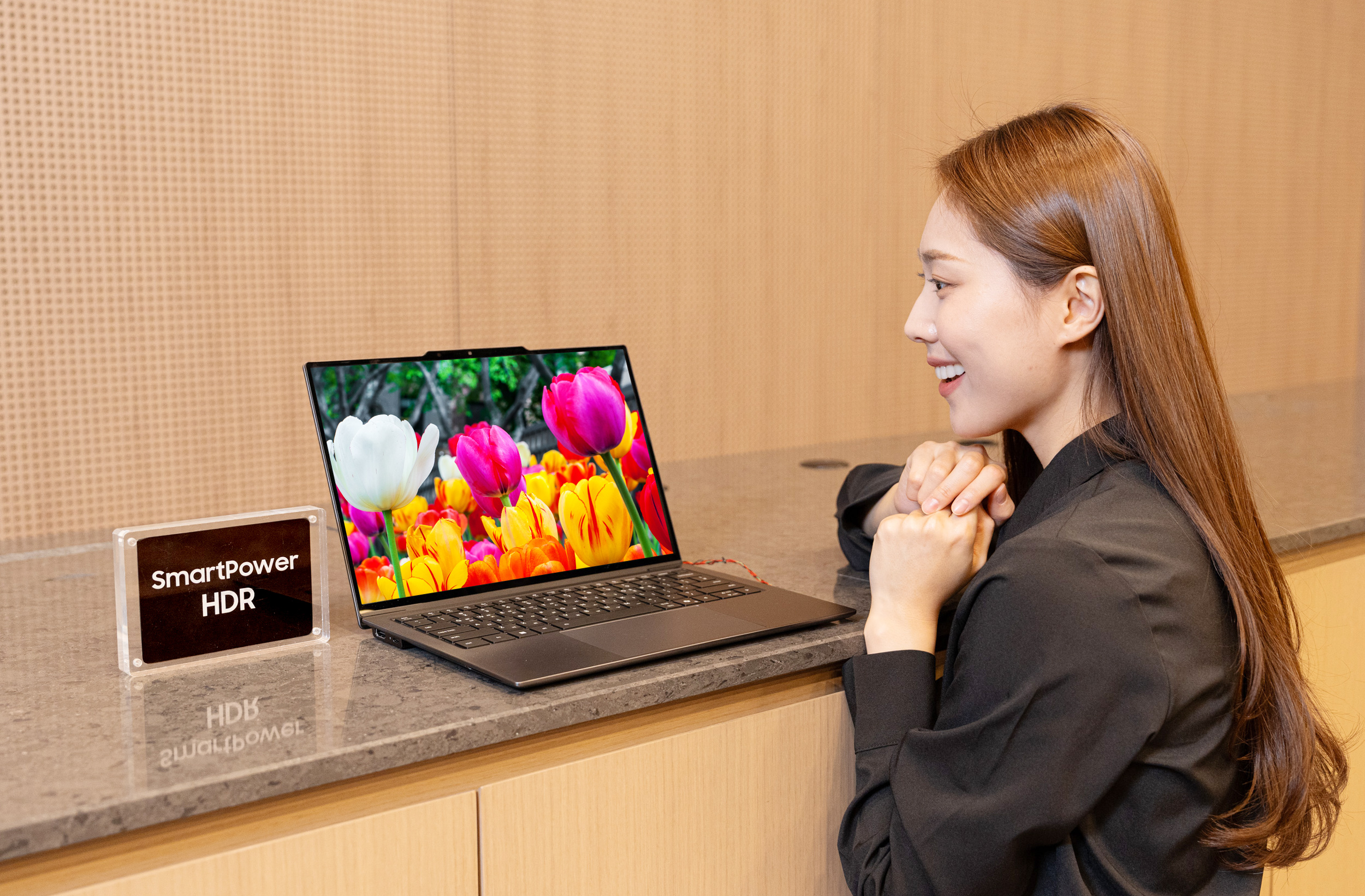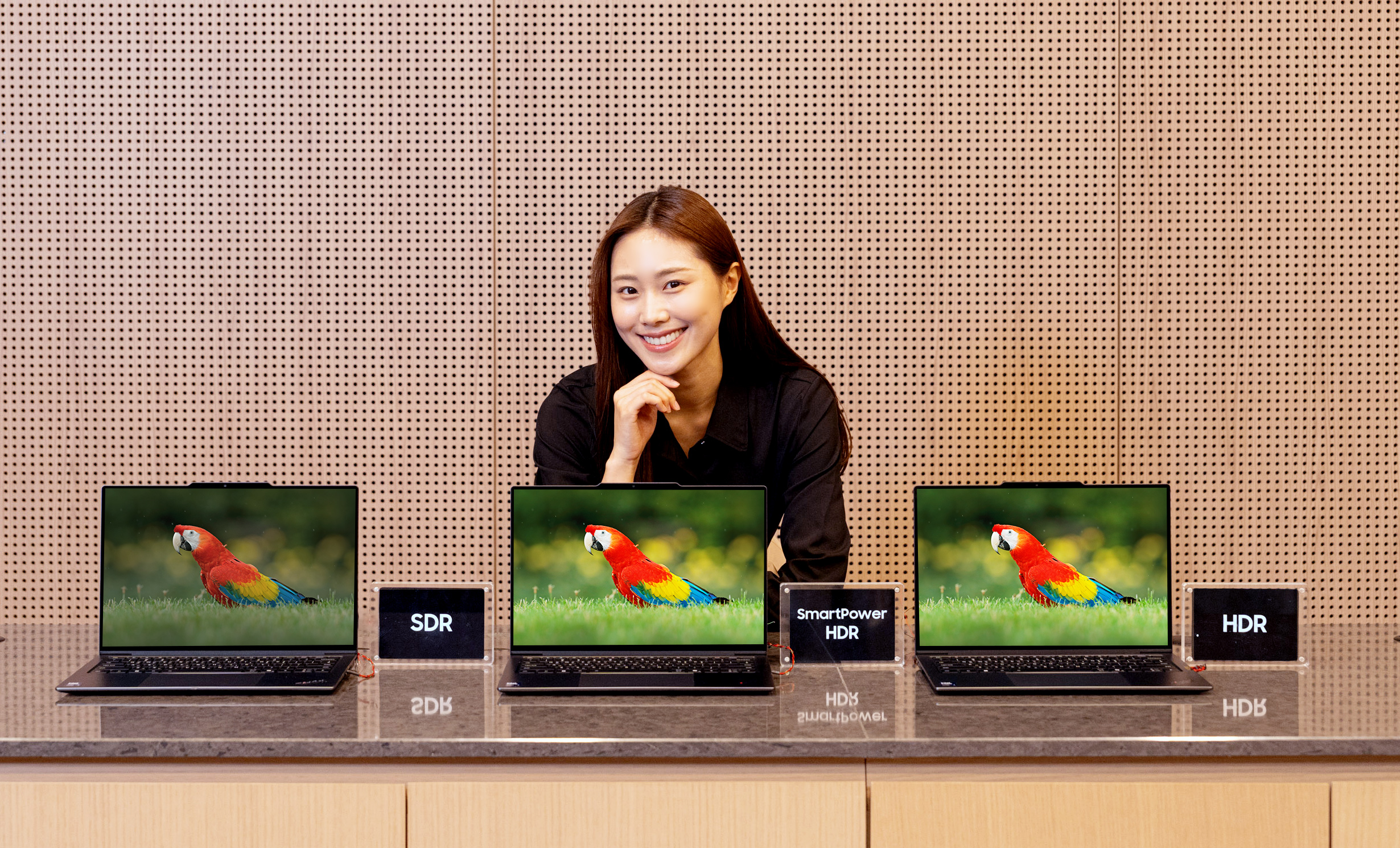
• SmartPower HDR™ enables vivid HDR visuals with optimized power efficiency
• Dynamic voltage control adapts to content characteristics, improving on conventional fixed-voltage HDR modes
• OLED’s emissive power consumption reduced by up to 22% in standard usage and up to 17% in HDR content
• Samsung Display and Intel’s collaboration marks a significant achievement in enhancing display performance and power efficiency.
SEOUL, January 7, 2026 - Extending its long-standing industry relationship, Samsung Display – in collaboration with Intel - has developed SmartPowerHDR™, which can reduce OLED’s emissive power consumption by up to 22% in HDR mode on laptops. As AI PCs become more widespread, the new technology is expected to significantly improve battery efficiency and enhance the HDR viewing experience.
SmartPower HDR™ allows users to enjoy HDR content on laptops while minimizing power usage. Display power consumption is largely affected by driving voltage. Unlike conventional HDR modes that apply a fixed high voltage regardless of the content type causing unnecessary power loss, SmartPower HDR™ dynamically adjusts voltage based on the characteristics of the displayed content.
For example, general laptop use cases such as web browsing or document editing can operate at lower voltage levels. In contrast, high-definition content such as games or video playback requires higher brightness and voltage. Traditional HDR modes remain locked at maximum brightness, resulting in excessive power usage even in standard scenarios. As a result, many laptops default to SDR (Standard Dynamic Range) mode despite the color and brightness advantages of HDR.
In comparison, SmartPower HDR™ reduces the power consumption associated with OLED pixel emission by up to 22% in general usage and by up to 17% during HDR content. Notably, in general usage scenarios, power consumption is comparable to that of SDR mode.
Samsung Display has closely collaborated with Intel on the development of this technology. SmartPower HDR™ is implemented by analyzing the peak brightness of each frame in real time via the laptop’s SoC (System on Chip), which sends this data to the panel’s Timing Controller (TCON). The TCON then calculates the optimal driving voltage based on this data and the On Pixel Ratio (OPR) – the ratio of active pixels on the screen.
“SmartPower HDR™ delivers real-world benefits that consumers can feel beyond just specs,” said Brad Jung, Vice President and Head of the Large Display Sales and Marketing & Product Planning Team at Samsung Display. “We will continue to advance SmartPower HDR™ while further developing a range of low-power OLED technologies, enabling more consumers to enjoy vivid, high-quality HDR content on laptops.”
“Displays account for over half of a laptop’s total power usage, making them a key target for efficiency gains,” said Todd Lewellen, Vice President and General Manager of PC Ecosystem & AI Solutions at Intel. “This collaboration pushes the boundaries of visual innovation, marking an important step in performance and power optimization.”