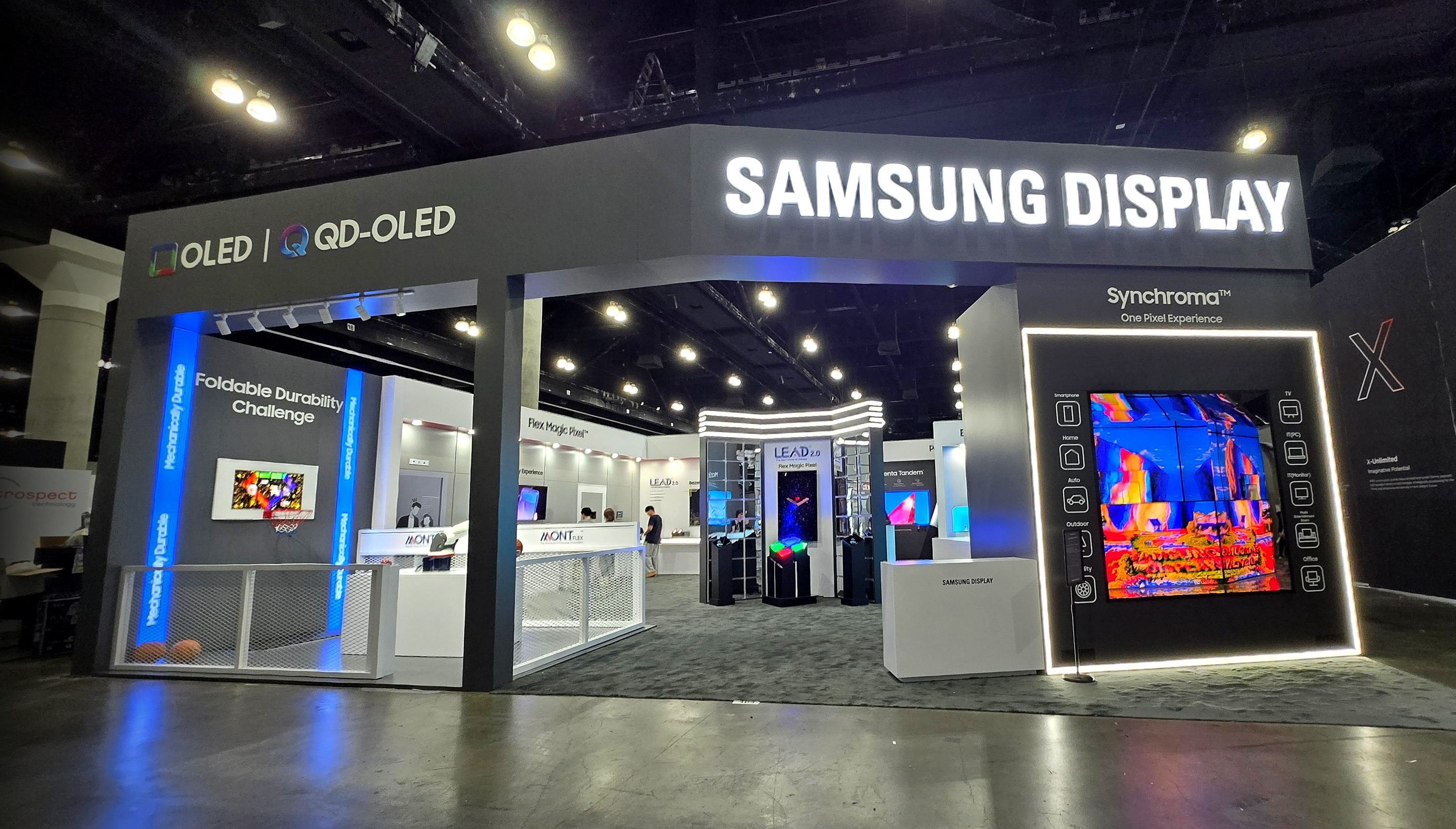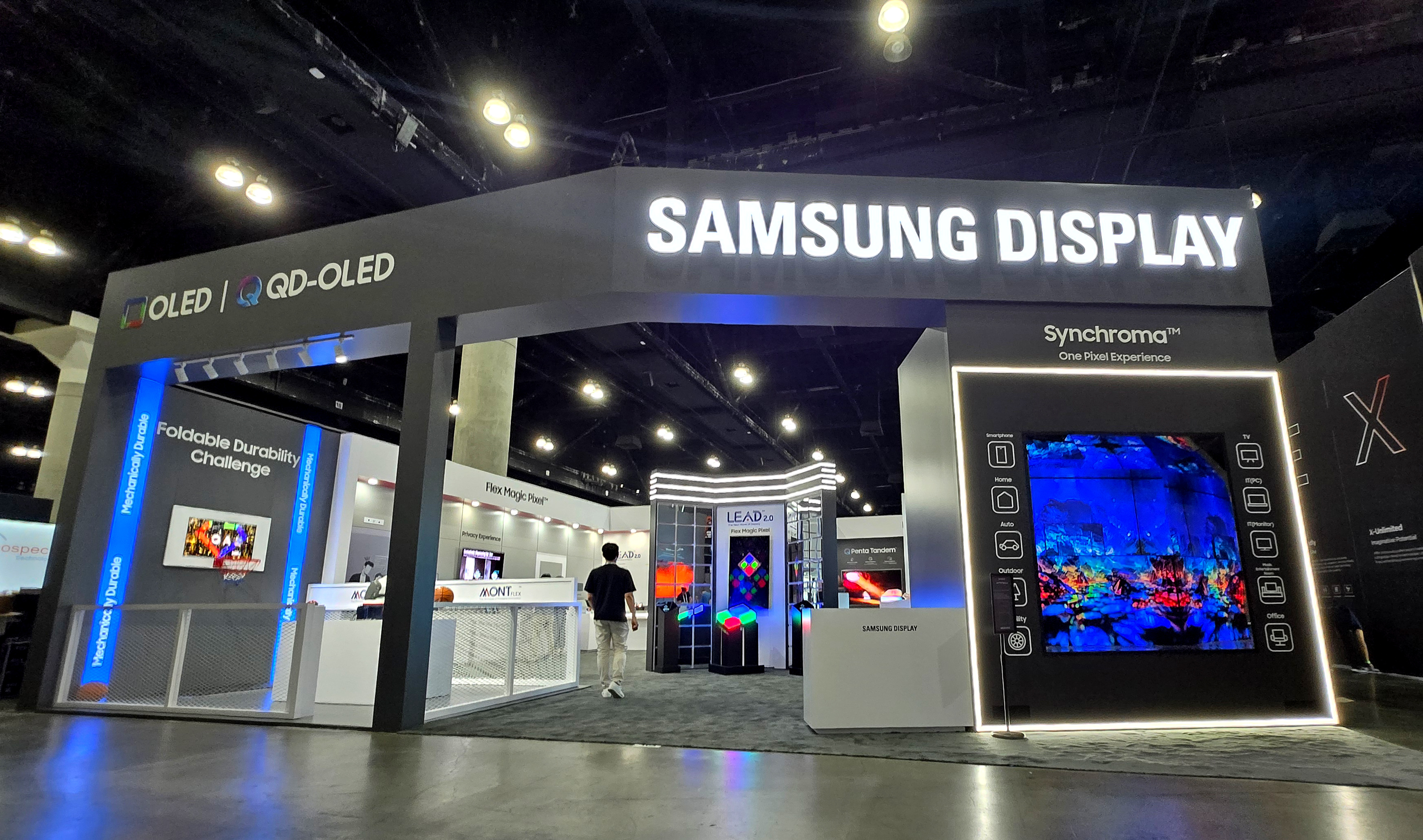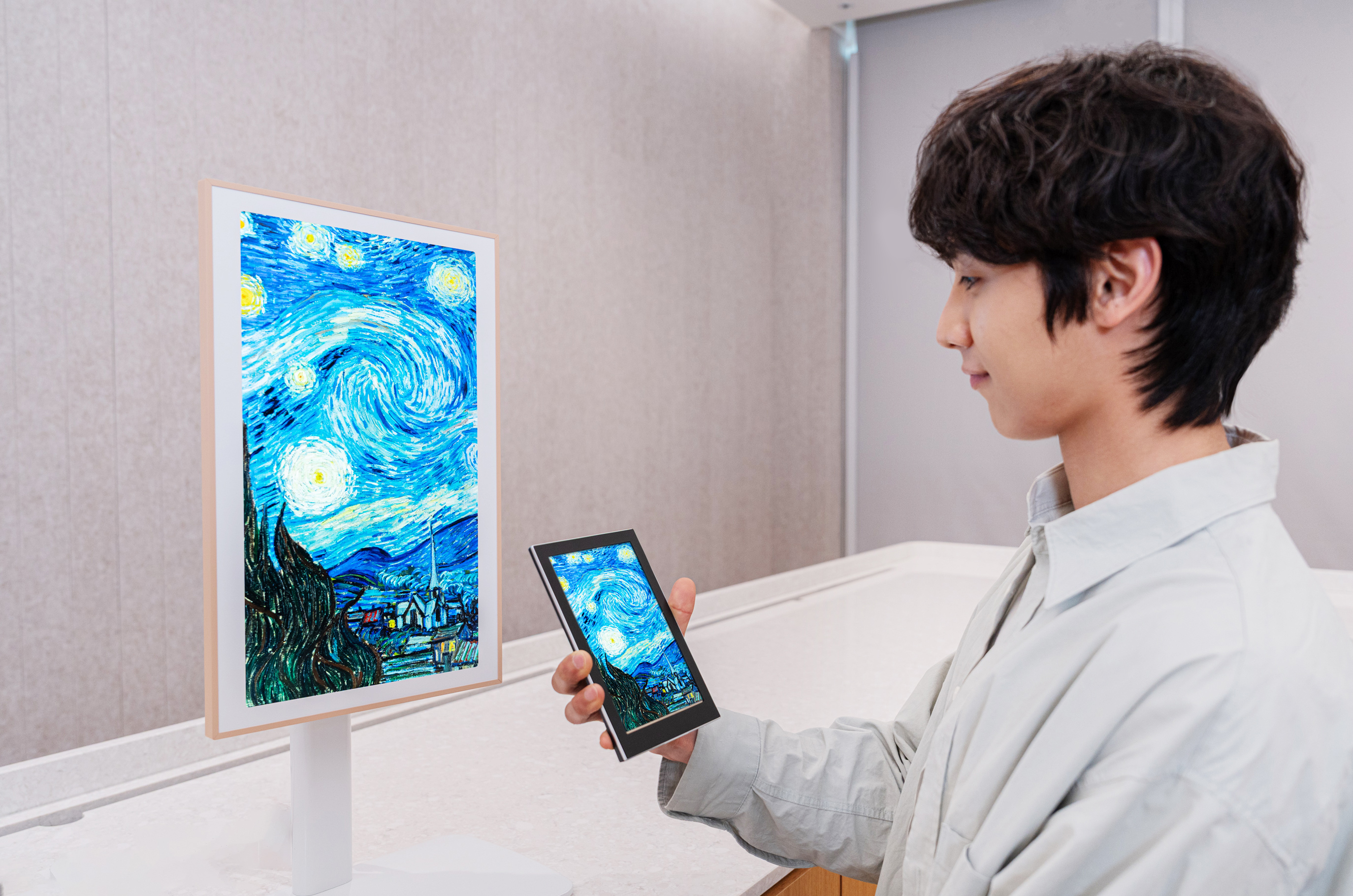
• Showcasing next-generation display innovations at Display Week 2026 held in Los Angeles from May 5 to 7
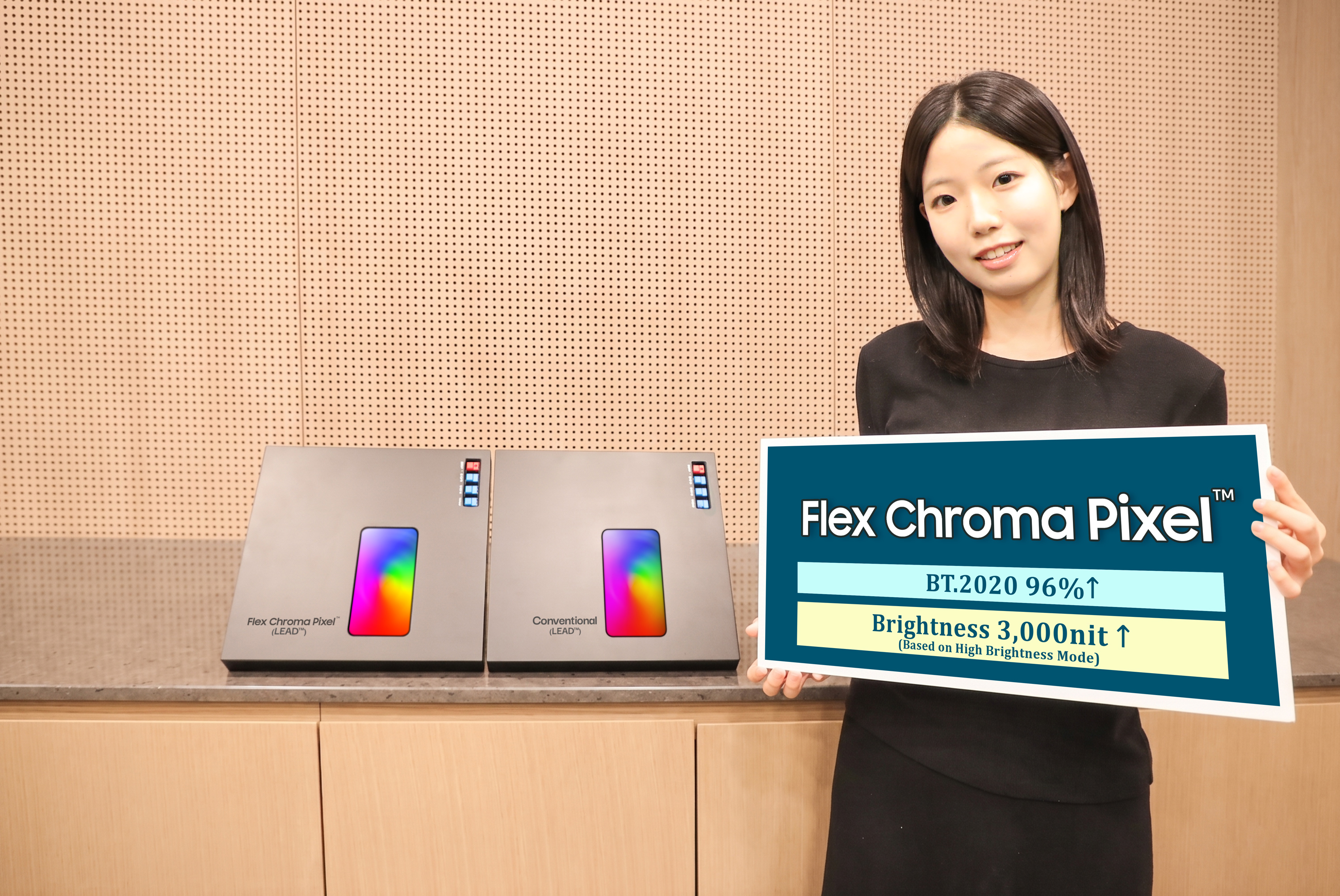
• Unveiling the world’s widest color gamut OLED, supporting up to 3,000 nits in High Brightness Mode (HBM) and BT.2020-96 color coverage
• Introducing Sensor OLED Display, combining 500 PPI resolution with integrated privacy protection technology
• Presenting next-generation EL-QD with the industry’s highest 500 nits, recognized as SID Distinguished Paper
• Revealing Stretchable Display 2.0 with 3D vehicle dashboard visuals and the highest resolution in the field
SEOUL, May 5, 2026 – Samsung Display announced today that it will participate in Display Week 2026, hosted by the Society for Information Display (SID), and showcase its latest display innovations.
The exhibition will take place from May 5 to 7 at the Los Angeles Convention Center in California. Display Week is one of the world’s largest display industry exhibitions, where global companies and experts gather to share advanced technologies and research achievements.
Under the theme “The Spectrum of Display Innovation with AI” Samsung Display will present its latest technologies as a leading OLED company.
At the exhibition, Samsung Display will unveil a wide color gamut OLED supporting up to 3,000 nits in High Brightness Mode (HBM)[1] and 96% BT.2020 color coverage (BT.2020-96), along with a Sensor OLED Display featuring 500 PPI high resolution and Organic Photodiode (OPD) technology, and Samsung Display’s proprietary privacy protection technology, Flex Magic Pixel™, to be introduced for the first time this year.
Samsung Display will also present EL-QD products delivering a 25% brightness increase from last year’s 400 nits to an industry-leading 500 nits, alongside a 200 PPI stretchable display with the industry’s highest resolution.
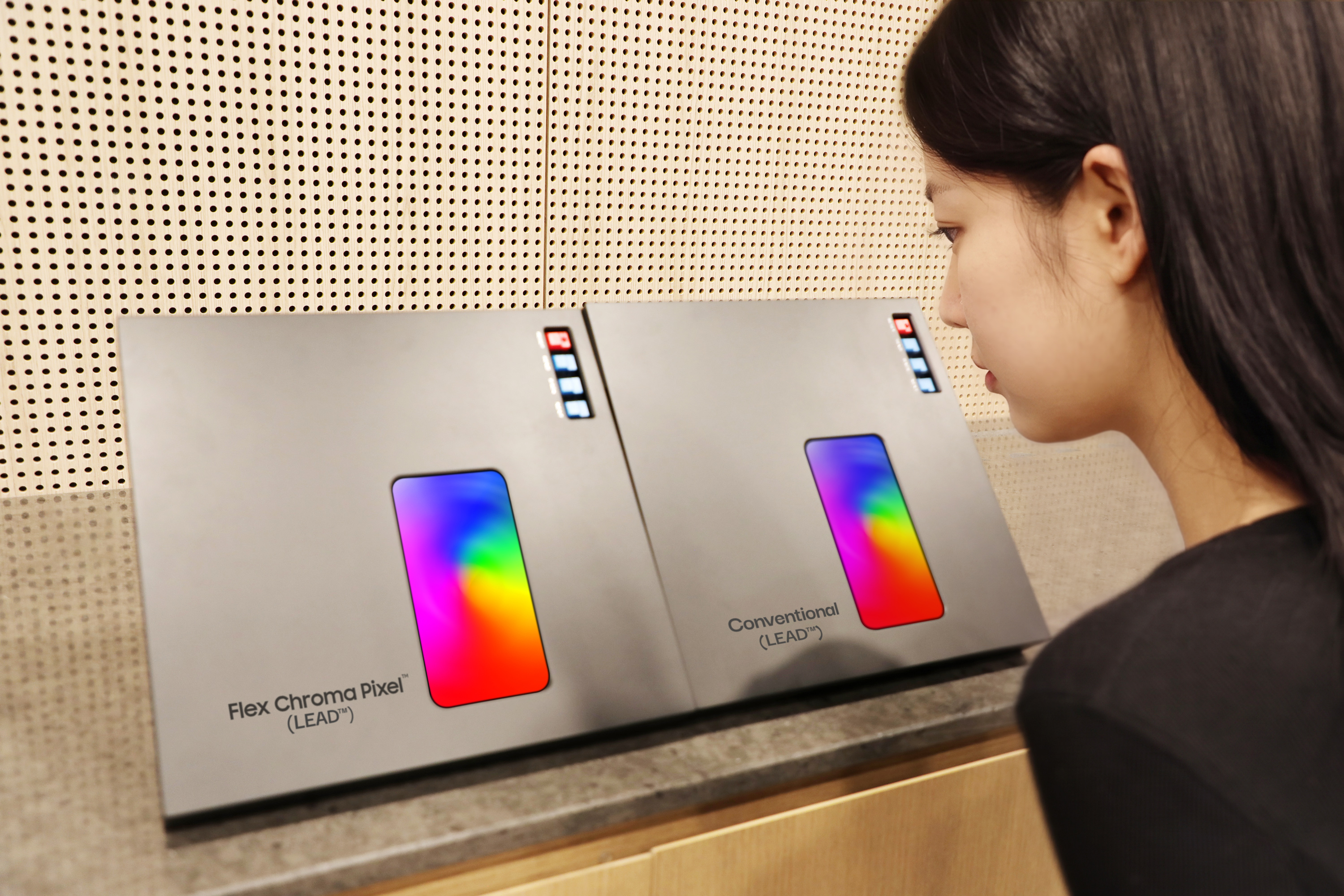
Wide Color Gamut OLED ‘Flex Chroma Pixel™’ Debuts with 3,000 Nits and BT.2020-96 Coverage
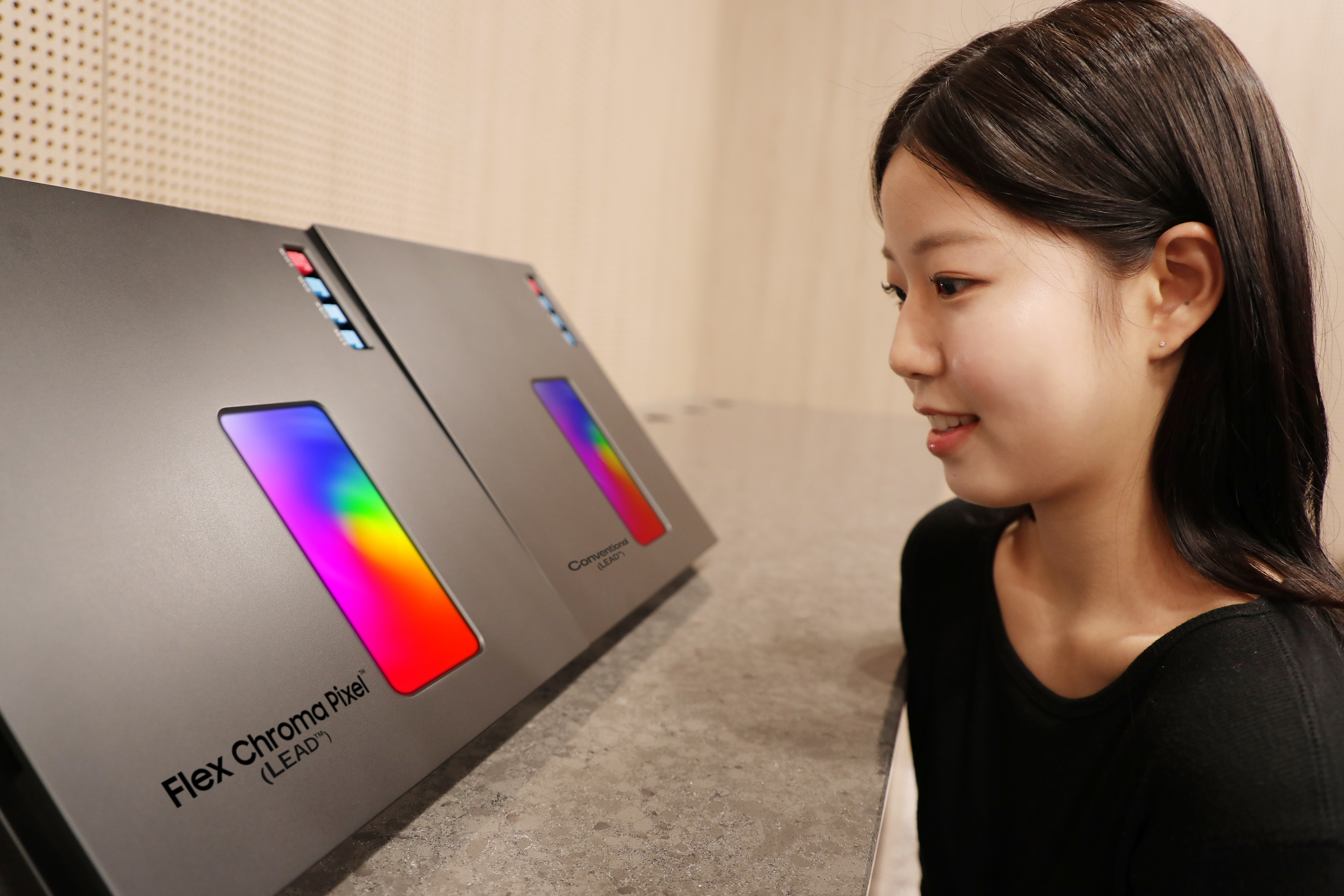
Samsung Display will debut its smartphone OLED technology, Flex Chroma Pixel™, capable of reaching up to 3,000 nits in High Brightness Mode while supporting BT.2020-96 color space.
BT.2020 is a color space standard established by the International Telecommunication Union (ITU) for UHD and HDR broadcasting. Among internationally used standards, it offers the widest color gamut – approximately 1.7 times broader than DCI-P3.
Samsung Display applied phosphorescent sensitized fluorescence (PSF), a next-generation emissive material, to enhance OLED color purity and color reproduction. In addition, by incorporating LEAD™, Samsung Display’s proprietary low-power, high-brightness polarizer-free OLED technology, the company developed a wide color gamut OLED capable of reaching up to 3,000 nits in HBM without compromising the lifetime of organic materials.
While most commercially available smartphone displays currently cover around 70% of the BT.2020 standard, Flex Chroma Pixel™ achieves 96%, representing one of the highest levels currently available.
A company official explained, “Some recent products in the industry have increased color purity while lowering brightness in order to meet the BT.2020 standard. Flex Chroma Pixel™ secures long lifetime, high brightness, and wide color gamut characteristics by optimizing both material performance and optical structure based on our LEAD™ technology.”
Sensor OLED Display with 500 PPI High-End Smartphone-Level Resolution Unveiled
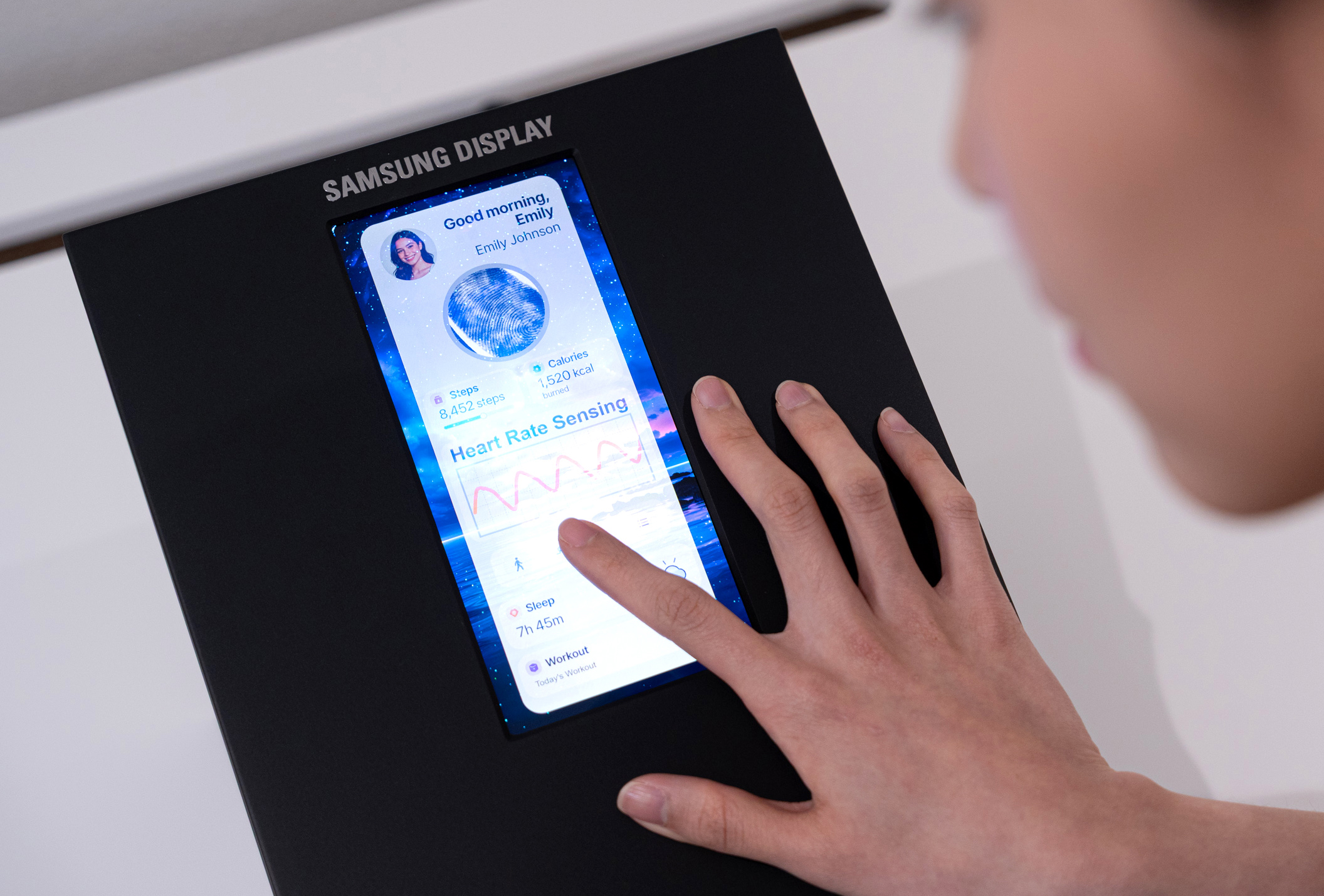
Samsung Display will also introduce a 6.8-inch smartphone-sized ‘Sensor OLED Display’ with 500 PPI resolution, representing a 33% increase compared to the 374 PPI version showcased at Display Week last year, reaching a level comparable to premium smartphones currently on the market.
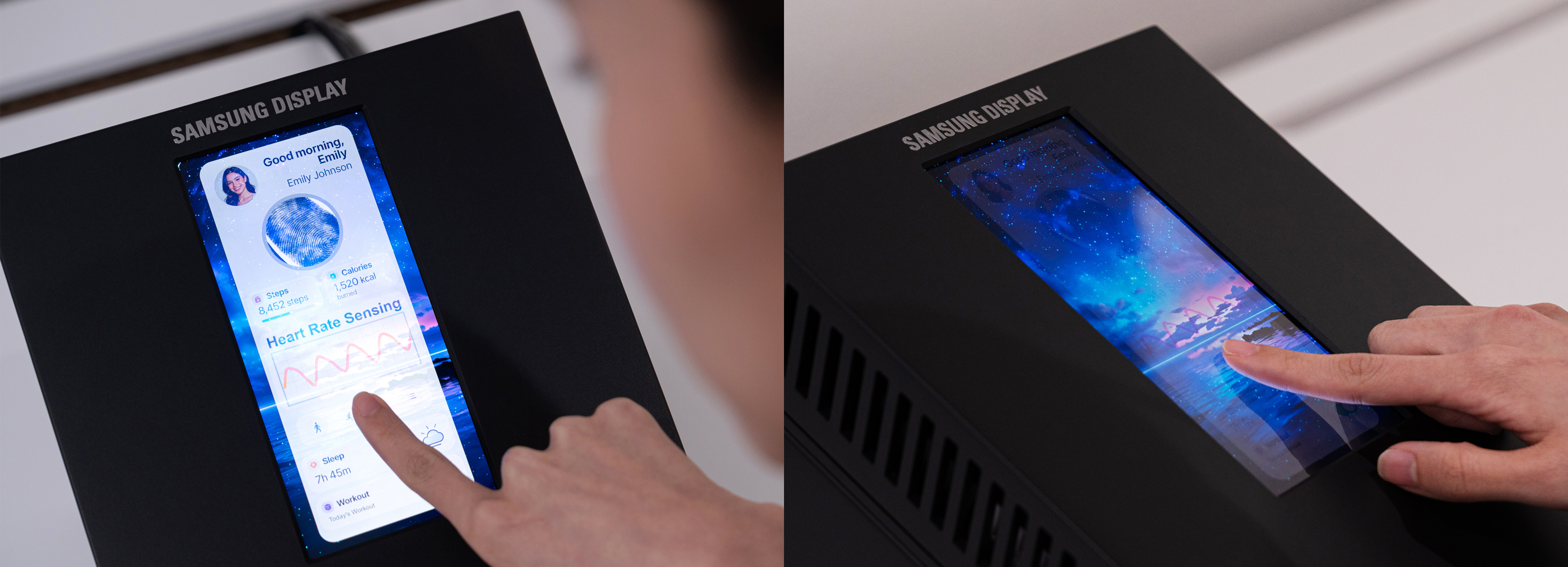
Sensor OLED Display is an innovative technology developed by Samsung Display that integrates OLED elements and Organic Photodiodes (OPD) within the panel through a co-deposition process, enabling the measurement of biometric information such as heart rate and blood pressure by detecting blood flow using light emitted from the display.
A company official explained, “Sensor OLED Display is structurally challenging to achieve high resolution, as RGB pixels and OPD pixels must be arranged within a single layer. Samsung Display was able to realize 500 PPI resolution through advanced panel design and precise process control technologies.”
This year’s Sensor OLED Display further incorporates Flex Magic Pixel™ (FMP), Samsung Display’s proprietary privacy protection technology, securing sensitive information measured through the display. Unlike conventional privacy displays that block side viewing completely, appearing black from the side, this implementation modifies the pixel-driving method so that, when viewed from the side, only key information is concealed while the original background content remains visible.
EL-QD Achieves Higher Brightness and Selected as SID Distinguished Paper
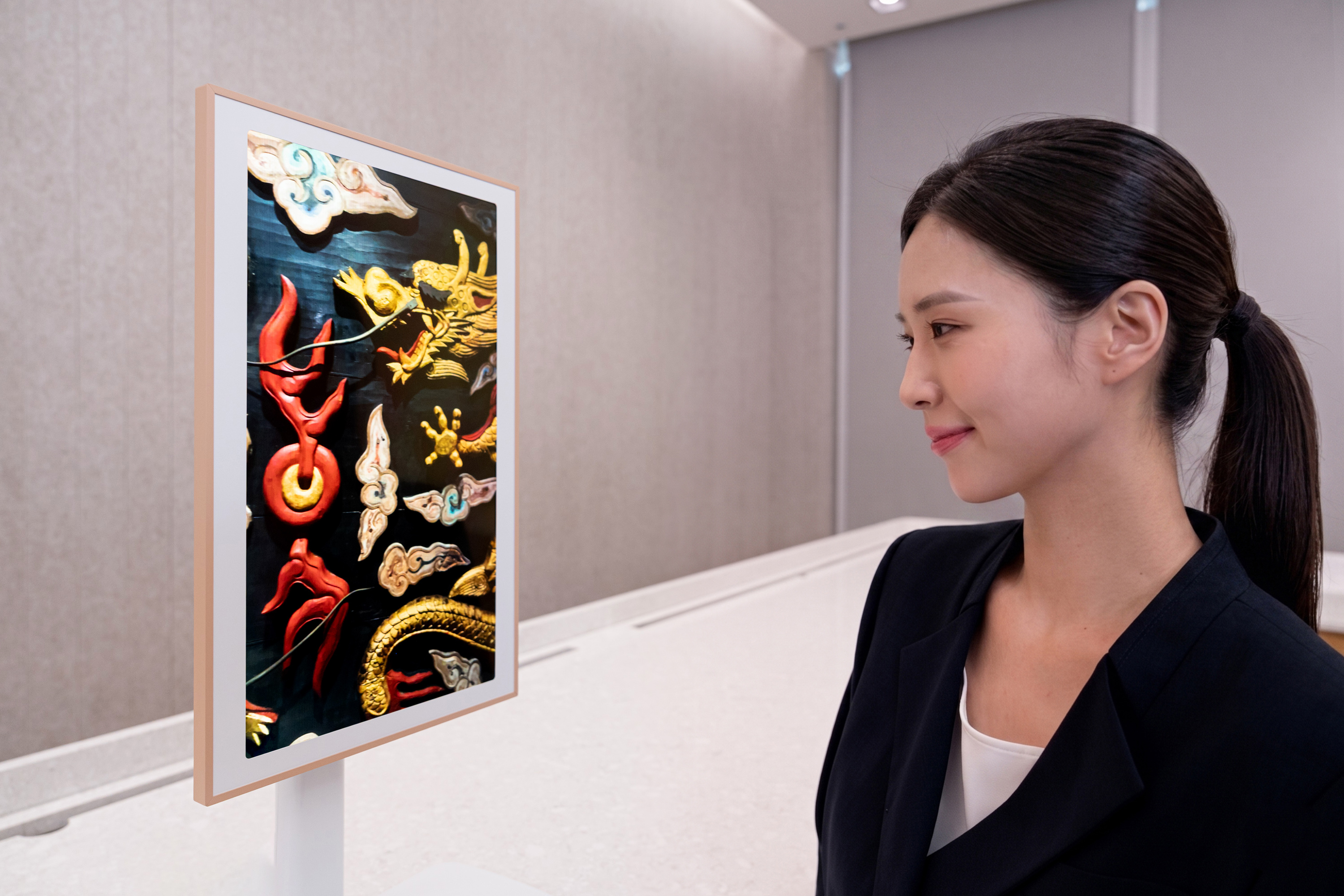
Samsung Display will showcase its latest EL-QD displays, achieving up to 500 nits brightness, representing a 25% improvement compared to last year.
EL-QD is a next generation quantum dot display technology in which quantum dot pixels emit light directly through electrical signals without the use of OLED, delivering both high color accuracy and power efficiency.
At the exhibition, Samsung Display will present two EL-QD prototypes: an 18 inch panel with 500 nits brightness and a 6.5 inch panel with 400 nits. Compared to the previous year, brightness has improved by 25% and 33%, respectively – from 400 to 500 nits and from 300 to 400 nits.
Samsung Display stated that it improved the stability and emission efficiency of EL-QD through surface treatment for quantum dot structure optimization and control of inter-particle spacing. This research finding has also been selected as a SID Distinguished Paper.
A company official said, “Improving emission efficiency not only enhances brightness but also reduces power consumption. EL-QD is expected to contribute to lowering display power usage and improving battery efficiency in future AI-based high-computing environments.”
Stretchable Display 2.0 Demonstrates High Resolution for Automotive Applications
Samsung Display will also unveil a next-generation stretchable display designed in the form of an automotive instrument cluster, achieving a world-leading 200 PPI resolution, approximately 67% higher than the 120 PPI model presented last year.
Considering that current automotive displays typically operate at around 200 PPI, this development demonstrates a level of technical completeness suitable for commercialization.
This micro LED based stretchable display features a speedometer screen that expands and transforms according to driving conditions, providing intuitive visual information while maintaining clear text and graphics.
To achieve higher resolution, Samsung Display increased pixel density within the bridge structure by two times. The bridge structure connects fixed regions where pixels or LEDs are located, enabling the panel to maintain electrical performance even when stretched.
A Samsung Display official explained, “By developing a new pixel structure, we were able to integrate more pixels within the bridge structure and achieve higher resolution. When combined with Software Defined Vehicle (SDV) environments, this technology is expected to dynamically adjust the display according to driving conditions and maximize visibility.”
“We are pleased to present our latest technologies and R&D achievements to global experts and industry leaders at SID 2026,” said Changhee Lee, Executive Vice President and Chief Technology Officer at Samsung Display. “Samsung Display will continue to lead display innovation through ongoing research and development, serving as a technological compass for both customers and the industry.”
[1] High Brightness Mode (HBM): A technology that increases brightness to its maximum level in bright outdoor environments, leveraging the characteristics of self-emissive displays.