November 21 | 30 Years of World Television Day How Far Has Television Come?  From CRT TVs to QD-OLED See how display technology has changed TVs over the years
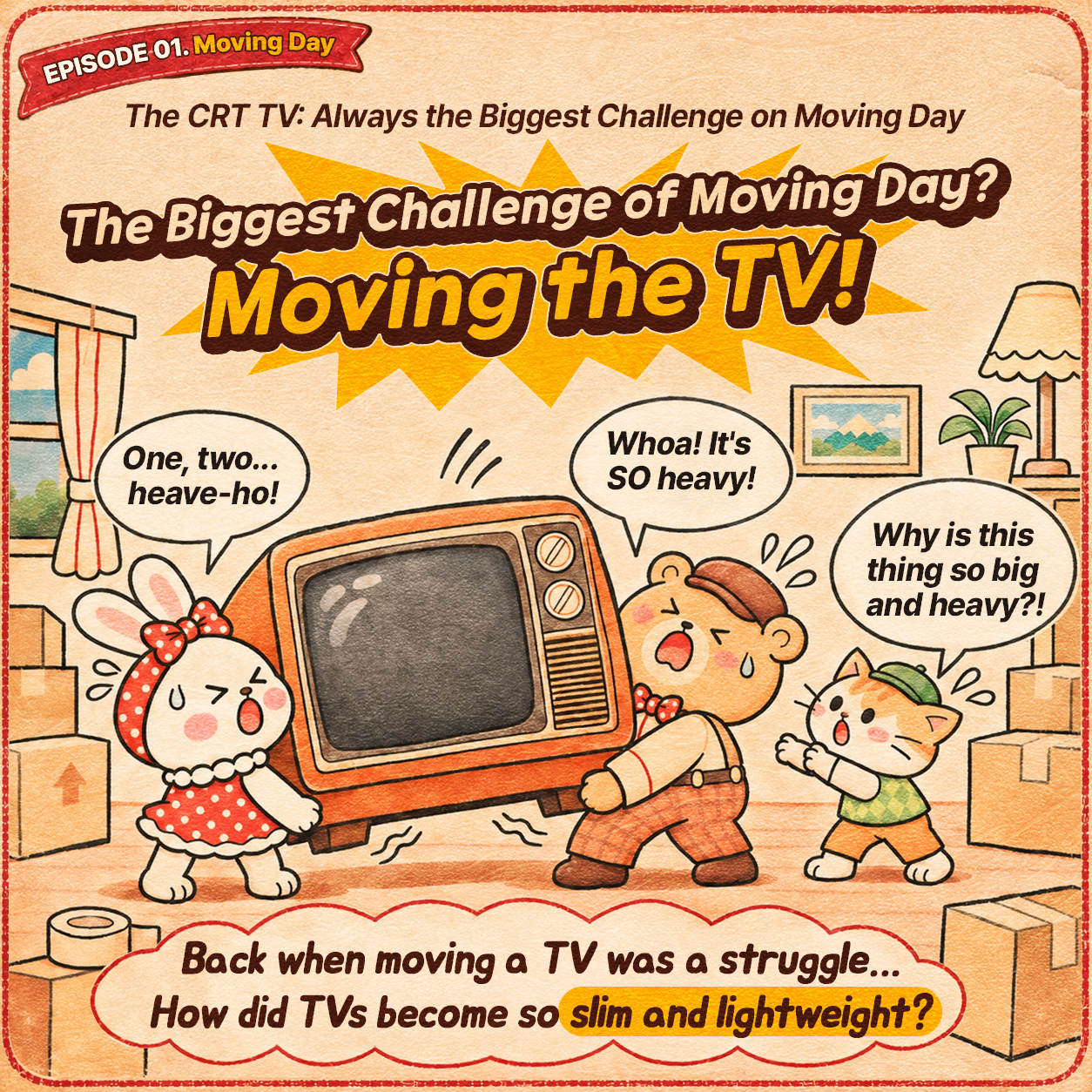
EPISODE 01. Moving Day  The CRT TV: Always the Biggest Challenge on Moving Day The biggest challenge of moving day? Moving the TV!  One, two... heave-ho! Whoa! It's SO heavy! Why is this thing so big and heavy?!  Back when moving a TV was a struggle… How did TVs become so slim and lightweight?
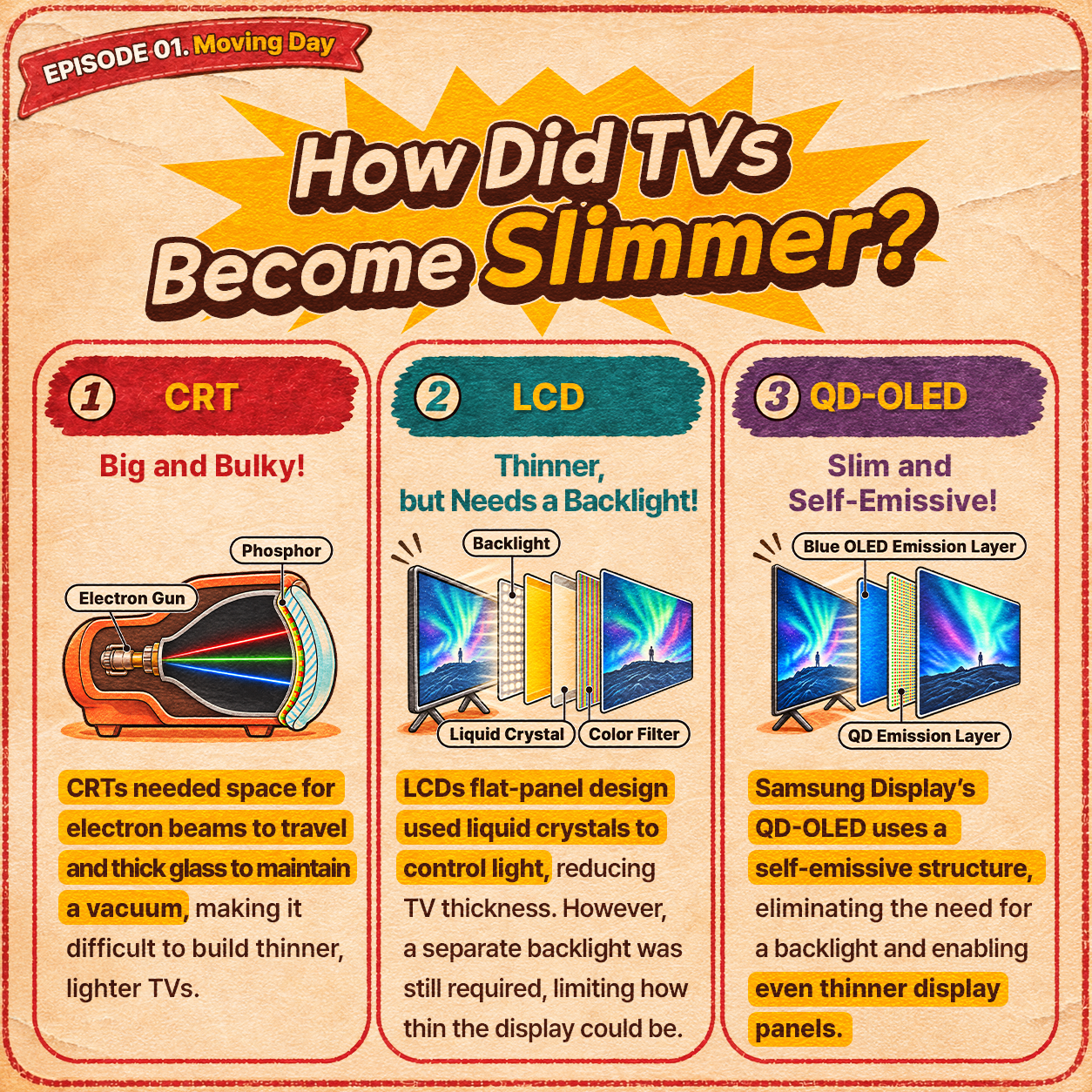
EPISODE 01. Moving Day  How Did TVs Become Slimmer?  ①	CRT | Big and Bulky! Electron Gun / Phosphor CRTs needed space for electron beams to travel and thick glass to maintain a vacuum, making it difficult to build thinner, lighter TVs.  ②	 LCD | Thinner, but Needs a Backlight! Backlight / Liquid Crystal / Color Filter LCDs flat-panel design used liquid crystals to control light, reducing TV thickness. However, a separate backlight was still required, limiting how thin the display could be.  ③	 QD-OLED | Slim and Self-Emissive! Blue OLED Emission Layer/ QD Emission Layer Samsung Display’s QD-OLED uses a self-emissive structure, eliminating the need for a backlight and enabling even thinner display panels.
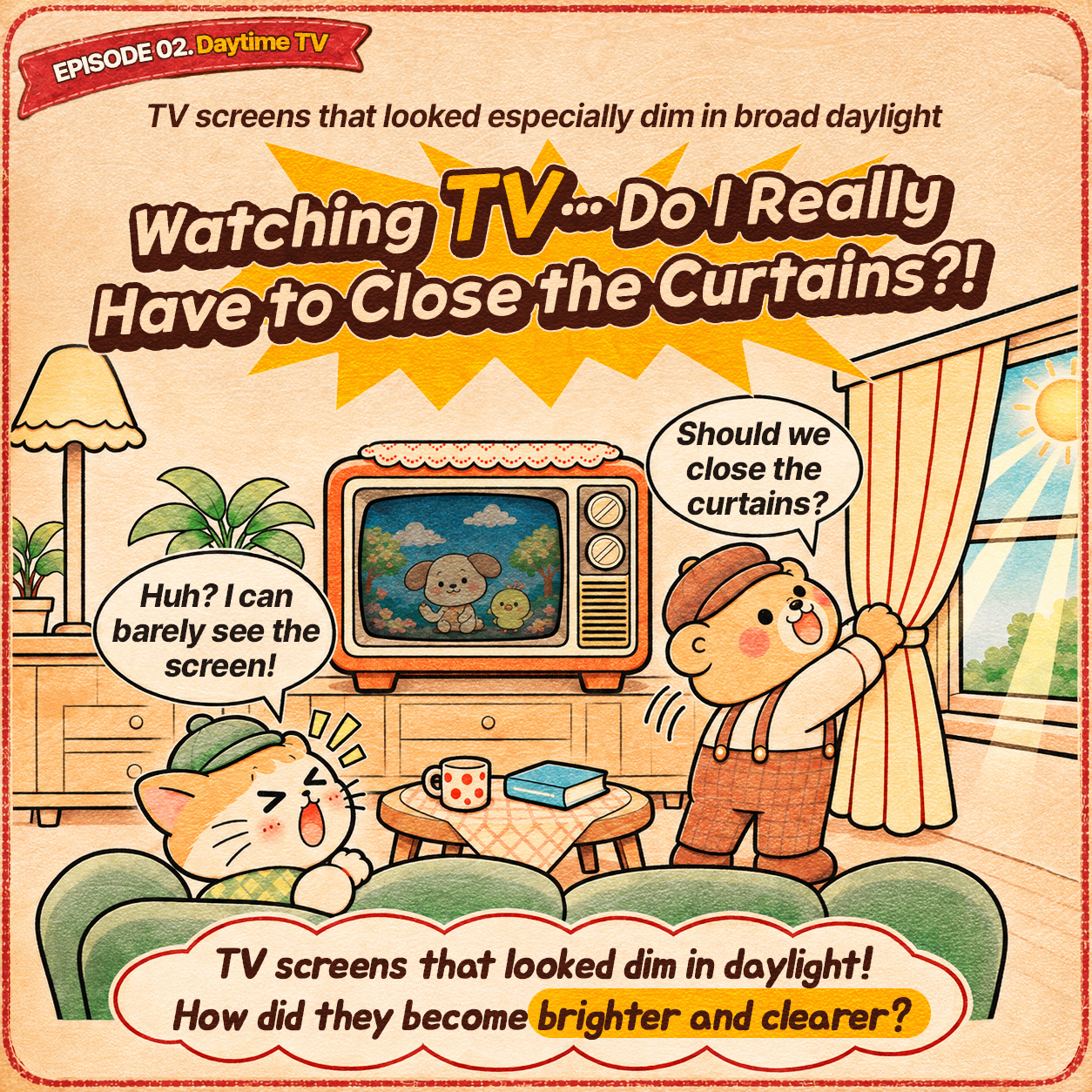
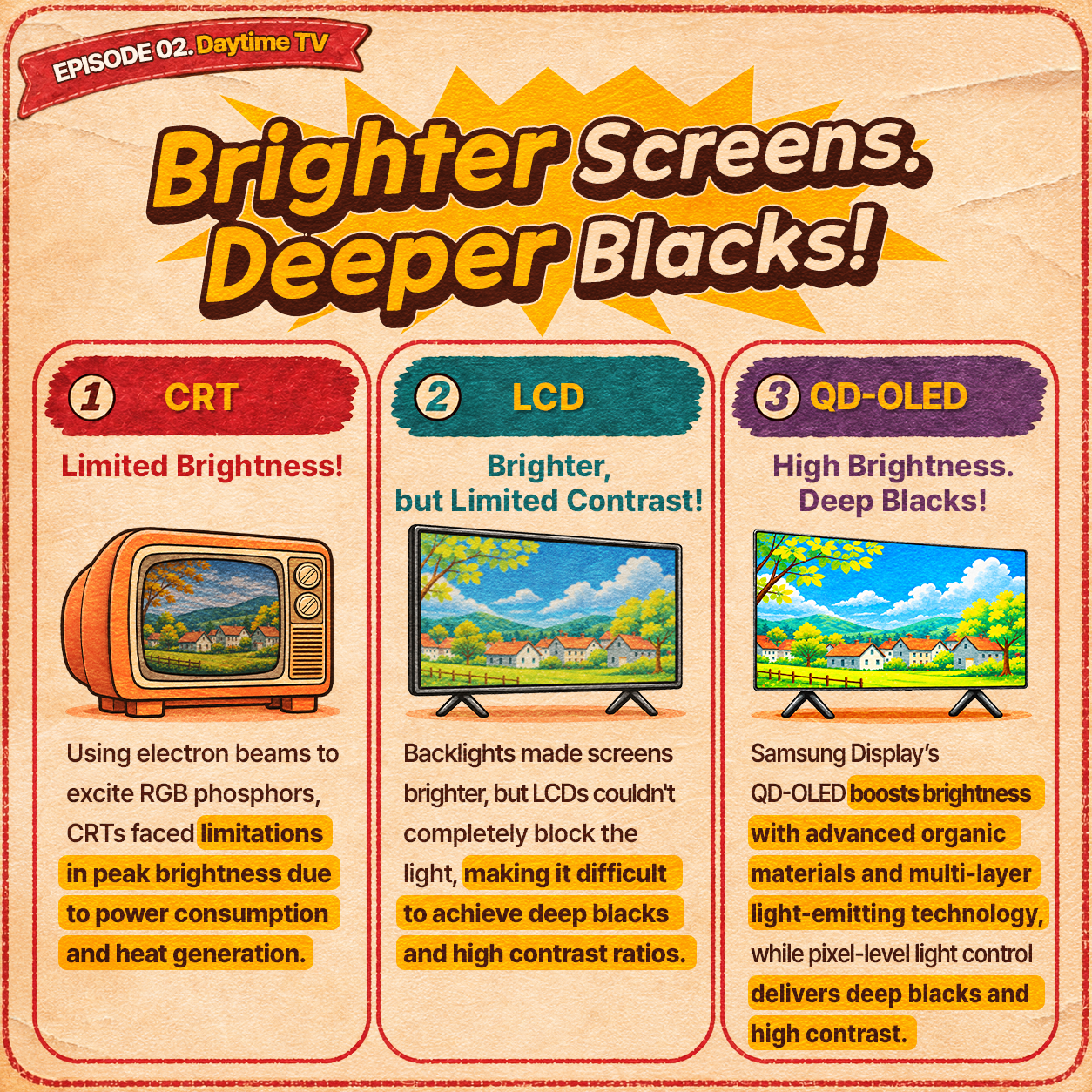
EPISODE 02. Daytime TV  TV screens that looked especially dim in broad daylight Watching TV... Do I really have to close the curtains?!  Huh? I can barely see the screen! Should we close the curtains?  TV screens that looked dim in daylight! How did they become brighter and clearer?
EPISODE 02. Daytime TV  Brighter Screens. Deeper Blacks! ①	 CRT | Limited Brightness! Using electron beams to excite RGB phosphors, CRTs faced limitations in peak brightness due to power consumption and heat generation.  ②	 LCD | Brighter, but Limited Contrast! Backlights made screens brighter, but LCDs couldn't completely block the light, making it difficult to achieve deep blacks and high contrast ratios.  ③	 QD-OLED | High Brightness. Deep Blacks! Samsung Display’s QD-OLED boosts brightness with advanced organic materials and multi-layer light-emitting technology, while pixel-level light control delivers deep blacks and high contrast.
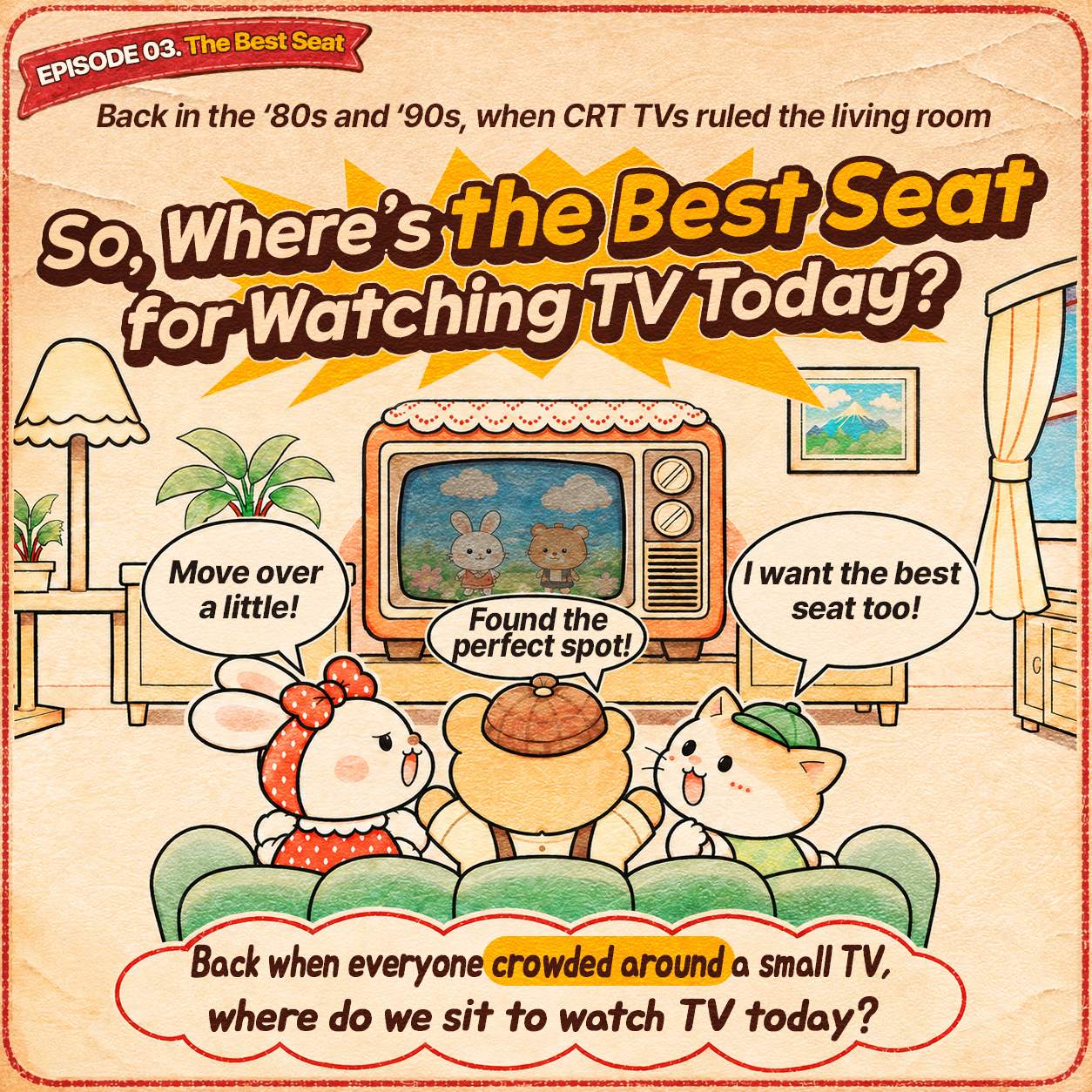
EPISODE 03. The Best Seat  Back in the ‘80s and ‘90s, when CRT TVs ruled the living room So, where's the best seat for watching TV today?  Move over a little! Found the perfect spot! I want the best seat too!  Back when everyone crowded around a small TV, where do we sit to watch TV today?
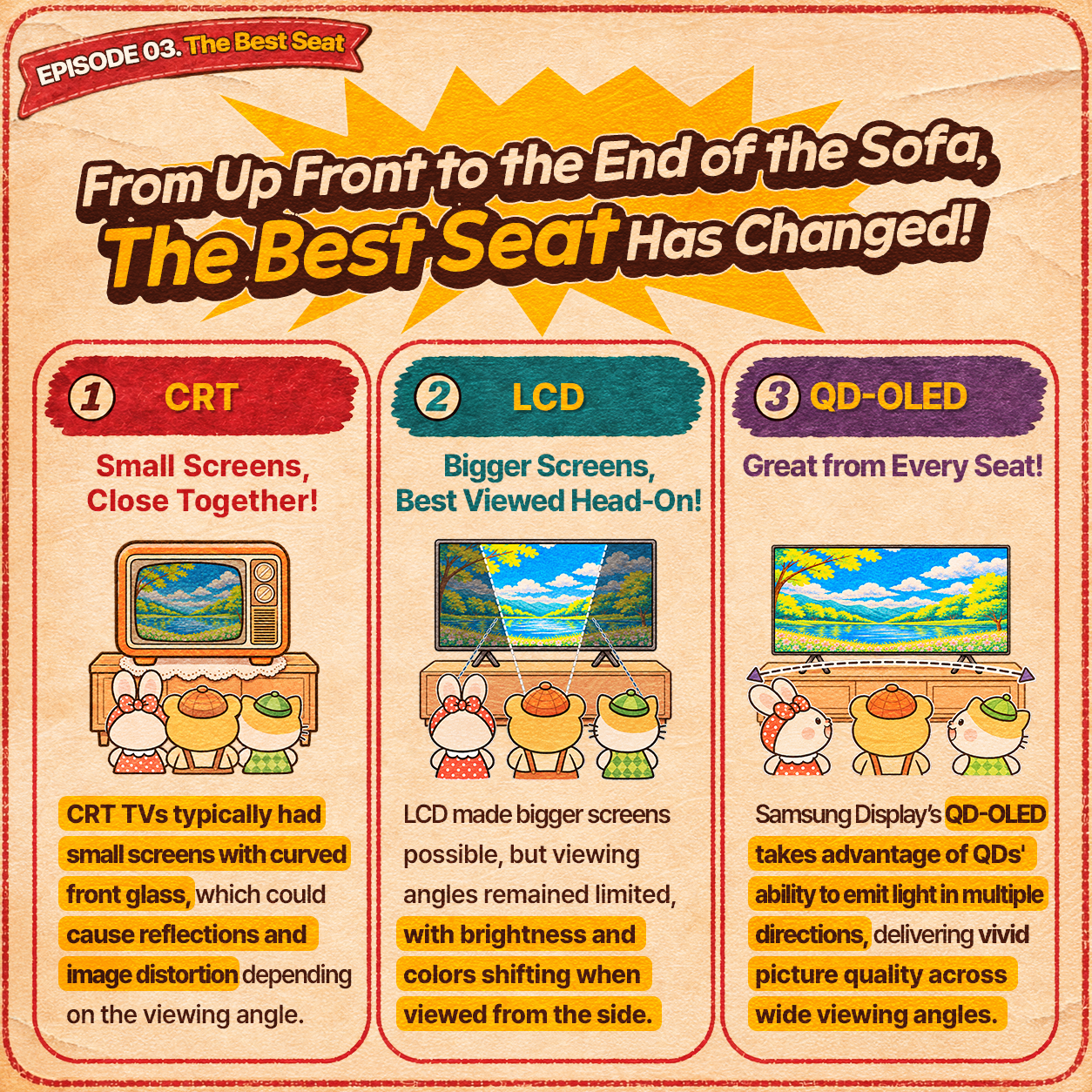
EPISODE 03. The Best Seat  From Up Front to the End of the Sofa, The Best Seat Has Changed!  ①	 CRT | Small Screens, Close Together! CRT TVs typically had small screens with curved front glass, which could cause reflections and image distortion depending on the viewing angle.  ②	 LCD | Bigger Screens, Best Viewed Head-On! LCD made bigger screens possible, but viewing angles remained limited, with brightness and colors shifting when viewed from the side.  ③	 QD-OLED | Great from Every Seat! Samsung Display’s QD-OLED takes advantage of QDs' ability to emit light in multiple directions, delivering vivid picture quality across wide viewing angles.
From CRT to LCD to QD-OLED, TVs have continued to evolve alongside display technology.  Thinner and lighter. Brighter and sharper. Stunning picture quality from virtually any seat.  And there's more to come. Stay tuned to see how display technology will transform TVs next!